
The electric golf cart has traveled far beyond the 18th hole. What began as a quiet, humble vehicle shuttling golfers across manicured fairways has transformed into a sophisticated mobility solution reshaping resorts, gated communities, college campuses, and even public streets. This guide covers the full scope of that transformation — from design and powertrain to cost, customization, and street-legal certification.
Electric Golf Cart: A battery-powered, low-speed vehicle originally engineered for golf course use, now engineered and regulated for multi-purpose transportation across residential, commercial, and recreational environments.
The numbers confirm this isn’t a niche trend. The global electric golf cart market is projected to reach $3.0 billion by 2030, growing at a CAGR of 5.9% from 2024, according to Strategic Market Research. Meanwhile, 76% of golf courses worldwide have already replaced gasoline-powered fleets with electric alternatives — a figure that signals a market at an irreversible tipping point.
The shift in who builds these vehicles matters just as much as who buys them. Innovation from a leading china electric follow golf cart manufacturer has pushed engineering standards to a global level, bringing precision-built platforms, advanced lithium battery systems, and modular chassis designs to buyers who expect both performance and durability. This competitive manufacturing landscape has directly accelerated the transition away from gas-dependent designs.
Two key terms define modern buyers’ choices:
- Golf Buggy: A lightweight, course-specific vehicle optimized for turf sensitivity and short-range transport.
- Utility Vehicle (UV): A purpose-built platform engineered for cargo capacity, passenger versatility, and extended operational range — increasingly the preferred category for non-golf applications.
The A-Type design has emerged as the pinnacle of this utility category, blending clean automotive aesthetics with hardworking functionality. Paired with modern lithium power upgrades, these platforms deliver consistent performance that gas-powered alternatives simply can’t match across a full duty cycle.
The real question for any buyer or fleet manager isn’t whether to go electric — it’s understanding exactly why electric consistently wins on total cost and reliability, which is precisely where the gas-versus-electric comparison becomes essential.
Gas vs. Electric: Why the Total Cost of Ownership Favors the Battery
When buyers evaluate a club car cart golf purchase or a full fleet upgrade, the sticker price rarely tells the complete story. The real financial picture emerges over three to five years of operation — and that’s where electric carts consistently outperform their gas-powered counterparts by a significant margin.
The Mechanical Simplicity Advantage
One of the most overlooked benefits of electric golf carts is what they don’t have. Gas-powered units carry a long list of failure-prone components: spark plugs, oil filters, carburetors, drive belts, and fuel lines. Each of those parts represents a scheduled replacement, an unscheduled breakdown, or both. According to the National Golf Foundation, electric models require substantially less mechanical maintenance than internal combustion engines precisely because they eliminate these complex fuel systems and moving engine parts. Fewer moving parts means fewer things go wrong — and fewer expensive service calls.
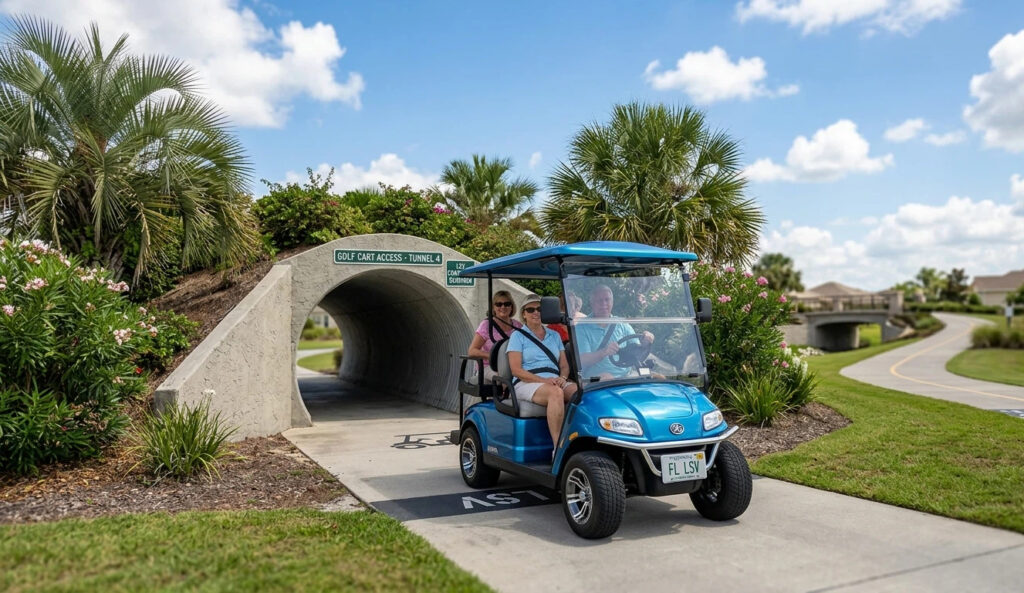
Total Cost of Ownership (TCO): The full financial burden of a vehicle over its useful life, including purchase price, fuel or energy, maintenance, repairs, and depreciation — not just the upfront cost.
In practice, electric cart owners report approximately 40% less scheduled downtime compared to gas equivalents. For resort operators or course managers running 20+ carts simultaneously, that reduction translates directly into revenue protection and operational consistency.
Gas vs. Electric: Side-by-Side Comparison
| Category | Gas-Powered Cart | Electric Cart |
|---|---|---|
| Maintenance | Oil changes, spark plugs, belts, fuel filters | Battery checks, brake inspections, tire rotations |
| Noise Level | Moderate to loud engine noise | Near-silent operation |
| Emissions | CO₂, carbon monoxide, exhaust fumes | Zero direct emissions |
| Fuel/Energy Cost | $0.08–$0.12 per mile (gasoline) | $0.01–$0.03 per mile (electricity) |
Quiet Operation and Community Impact
Noise pollution — the measurable disturbance caused by unwanted sound in shared environments — is a growing concern in residential communities, resorts, and golf courses where ambiance matters. Electric carts operate at near-silent levels, making them the preferred choice for early morning rounds, luxury resort properties, and gated neighborhoods where engine noise would be disruptive and unwelcome. That quiet advantage isn’t just a comfort feature; in many municipalities, it’s becoming a zoning requirement.
Energy Costs That Actually Make Sense
At $0.01 to $0.03 per mile for electricity versus $0.08 to $0.12 per mile for gasoline, the energy savings compound quickly across high-usage fleets. A fleet of 30 carts logging 25 miles per day each would save thousands of dollars annually on fuel alone — before accounting for reduced maintenance labor.
Understanding the full return on your electric fleet investment requires looking beyond fuel savings to battery lifecycle, charging infrastructure, and resale value. And on that front, the battery technology itself is where the most dramatic cost advantages are emerging — which brings us to the chemistry powering today’s highest-performing carts.
The Lithium Revolution: Why Battery Chemistry is the New Gold Standard
The debate over golf cart gas or electric has largely been settled by economics and practicality — but within the electric category, a second, equally important conversation is reshaping the market: which battery chemistry actually delivers on the promise of modern mobility? The answer, increasingly, is lithium iron phosphate, or LiFePO4 — and the performance gap between it and legacy lead-acid technology is wider than most buyers realize.
LiFePO4: The Chemistry That Changes Everything
LiFePO4 (Lithium Iron Phosphate): A lithium-ion battery chemistry favored for its exceptional thermal stability, non-toxic composition, and resistance to thermal runaway — making it among the safest rechargeable battery technologies available for vehicle applications.
Unlike traditional flooded lead-acid batteries, LiFePO4 cells don’t off-gas, corrode terminals, or require distilled water top-offs. They’re also significantly lighter — a lithium pack can weigh up to 70% less than its lead-acid equivalent — which directly translates to better range, more responsive handling, and less structural stress on the cart’s frame. For fleets operating across large resort properties or industrial campuses, that weight reduction compounds into measurable efficiency gains over thousands of operating hours.
Lifespan: Where the Real Math Happens
The lifespan difference between battery types isn’t just significant — it’s transformational. A standard lead-acid battery pack typically delivers 300–500 charge cycles before performance degrades to the point of replacement, equating to roughly 2–3 years of regular use. LiFePO4 batteries, by contrast, are rated for 2,000–5,000 charge cycles, routinely lasting 8–12 years in real-world applications.
Lithium batteries reduce total lifetime ownership costs by approximately 65% when accounting for replacement frequency, maintenance labor, and energy consumption — a figure that makes the higher upfront cost a straightforward investment rather than a luxury. For a deeper look at the conversion process and what to expect, the complete lithium upgrade breakdown covers the technical and financial side in full.
Pro Tip — Weight, Range, and Efficiency: Because LiFePO4 packs weigh dramatically less than lead-acid equivalents, the cart’s motor expends less energy moving the battery itself. This means longer range on a single charge, often 20–30% more miles, without any motor or controller upgrades. Less weight also reduces tire wear and improves hill-climbing performance on uneven terrain.
Charging: Speed, Simplicity, and Zero Memory Effect
Memory Effect: A phenomenon in older battery chemistries (notably NiCd) where incomplete discharge cycles cause the battery to “remember” a shorter capacity. LiFePO4 batteries are entirely free of this effect.
Lithium batteries accept a charge faster and more efficiently than lead-acid alternatives. There’s no need for equalization charges or multi-stage conditioning cycles. Plug in, charge to capacity, and go — with no penalty for partial charges. In high-turnover fleet environments, this flexibility is operationally significant.
One practical approach is to charge lithium carts opportunistically between shifts rather than waiting for a full discharge, a strategy that’s simply not viable with lead-acid chemistry without accelerating degradation.
The technical case for lithium is compelling on its own. But understanding where these batteries come from — and how to identify manufacturers who build them right — opens the door to the next critical question for any serious buyer.
Navigating the Global Market: Identifying High-Quality Chinese Manufacturing
The shift toward lithium-powered, feature-rich electric carts hasn’t just changed what buyers want — it’s reshaped where those carts come from. China has emerged as the dominant force in electric golf cart manufacturing, producing vehicles that rival — and in many cases surpass — legacy brands on both specification and price. But the global market is uneven, and knowing how to evaluate a supplier separates confident buyers from cautious ones.
Certification: The Non-Negotiable Starting Point
Not every cart rolling off a production line is ready for the road — literally. EEC (European Economic Community) certification is a mandatory compliance standard that validates an electric vehicle’s safety, emissions profile, and construction quality for international markets. According to Tara Golf Cart, obtaining EEC certification is a prerequisite for any electric golf cart classified as street-legal in Europe — and it functions as a strong proxy for build quality everywhere else.
When vetting global suppliers, prioritize these certification checkpoints:
- EEC type approval documentation for the specific model being purchased
- ISO 9001 manufacturing certification confirming quality management systems
- Verified export history to regulated markets (EU, Australia, North America)
- Compliance with UN38.3 lithium battery transport standards
- Clear documentation of VIN assignment for road registration purposes
Suppliers without this paper trail represent meaningful risk — regardless of how competitive their pricing appears.
Parts Support: The Hidden Cost That Separates Serious Manufacturers
One of the most persistent concerns among golf cart dealers and fleet buyers sourcing internationally is what happens after delivery. A cart priced attractively at the point of sale can become an expensive liability if replacement components take weeks to arrive or aren’t available at all.
OEM Parts Support: A manufacturer’s commitment to supplying original replacement components — including proprietary electronics, battery management systems, and drivetrain parts — directly through the same supply chain as the original build.
Reliable manufacturers make this commitment visible. Look for:
- Dedicated parts inventory maintained in export markets or through regional distributors
- Documented service intervals with accessible replacement schedules
- Controller and BMS compatibility across model generations
- Responsive technical support channels available in English
- Evidence of long-term model continuity rather than annual design overhauls
Innovation: Smart Manufacturing as a Quality Signal
The phrase “China Electric Follow” technology refers to a class of smart-follow systems — originally developed for autonomous golf caddies — that have migrated into full-size cart platforms. Its presence in a manufacturer’s lineup signals genuine R&D investment, not just assembly-line replication.
Varyon Machinery operates at this intersection of OEM-grade production and end-user reliability. Rather than positioning as a budget alternative, Varyon builds to export certification standards, maintains parts continuity, and supports buyers through the full ownership lifecycle. For buyers who also want to understand the hardware requirements before a cart reaches public roads, this breakdown of road-legal build requirements offers a useful reference point.
Smart manufacturing isn’t just about what goes into a cart — it’s about what a manufacturer is willing to stand behind once it leaves the factory.
The conversation about where your cart comes from naturally connects to what it needs to do once it arrives — and that begins with understanding the safety and compliance standards that determine whether it’s legal to drive anywhere beyond private property.
Safety and Compliance: What Makes a Golf Cart ‘Street Legal’?
As the world’s best golf carts utility vehicles continue to push beyond the fairway and into neighborhoods, campuses, and urban corridors, the question of street legality has moved from a niche concern to a purchasing priority. Understanding what separates a compliant Low-Speed Vehicle (LSV) from a basic recreational cart can protect your investment — and keep you out of legal trouble.
Low-Speed Vehicle (LSV): A category of motor vehicle legally permitted to operate on public roads with posted speed limits of 35 mph or lower, subject to federal and local safety equipment requirements.
The Essential Hardware Checklist
Before a golf cart earns the right to share a road with trucks and pedestrians, it must meet a specific set of equipment standards. EEC certification requires the following components as non-negotiable minimums:
- ✅ Headlights and taillights — functional in all lighting conditions
- ✅ Brake lights — mandatory for rear-end collision prevention
- ✅ Turn signals — front and rear, clearly visible
- ✅ Rearview mirrors — both side mirrors and an interior mirror
- ✅ 3-point seatbelts — for every passenger position
- ✅ Windshield — shatter-resistant, typically DOT-rated
- ✅ Horn — audible at a minimum required distance
In practice, premium models from quality manufacturers build these features directly into their base configurations. Budget models often treat them as costly add-ons — a distinction worth scrutinizing before purchase.
The 45 km/h Rule and Why It Matters
Speed compliance is where many buyers stumble. EEC certification caps operational speed at 45 km/h (approximately 28 mph) — a threshold designed to balance urban usability with pedestrian safety. Exceeding this limit doesn’t just void certification; it can reclassify your vehicle entirely, triggering full automotive registration requirements.
Important: Local DMV and DOT regulations vary significantly by state and municipality. Always verify your jurisdiction’s specific LSV speed, equipment, and registration requirements before finalizing any purchase.
Braking and Visibility Standards
Stopping power is equally critical. Premium-tier carts are increasingly adopting hydraulic disc brakes, replacing older drum brake systems that struggle under repeated urban use. Hydraulic disc systems offer shorter stopping distances and more consistent performance — qualities that matter enormously when sharing a sidewalk crossover or parking lot with pedestrians.
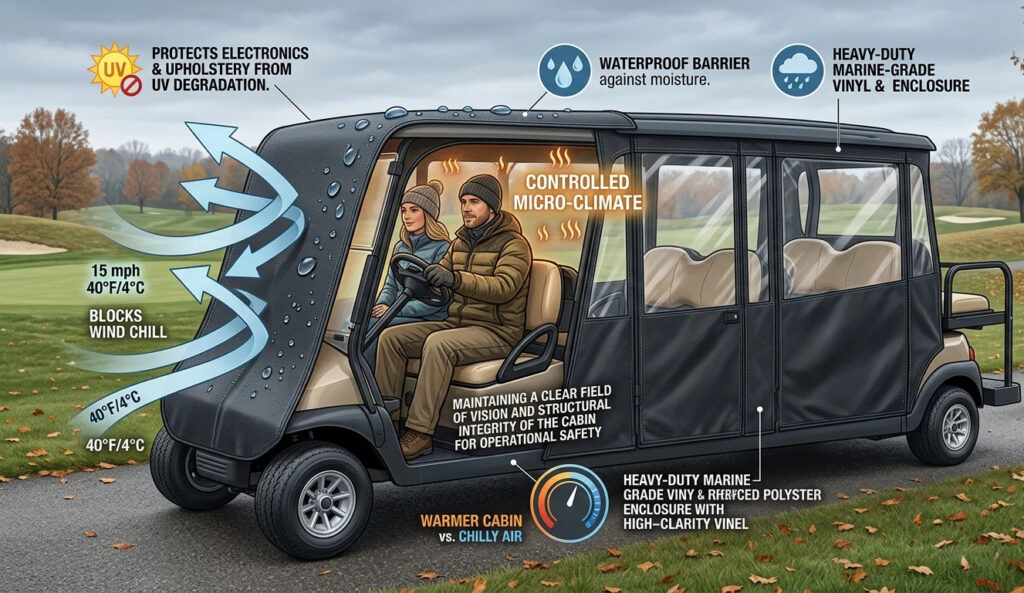
Visibility standards extend beyond mirrors. If you’re adding a winter enclosure to your compliant cart, make sure it doesn’t obstruct required sightlines — our guide to keeping your cart road-ready year-round covers exactly what’s permissible.
A compliant cart isn’t just a legal formality — it’s the foundation of confident, long-term ownership on any surface. Prioritize certified hardware from the start, and the road ahead stays open.
Key Takeaways
- Gas vs. Electric: Why the Total Cost of Ownership Favors the Battery
- The Lithium Revolution: Why Battery Chemistry is the New Gold Standard
- Navigating the Global Market: Identifying High-Quality Chinese Manufacturing
- Safety and Compliance: What Makes a Golf Cart ‘Street Legal’?
- Golf Buggy: A lightweight, course-specific vehicle optimized for turf sensitivity and short-range transport.