Walk through any modern corporate campus, resort, or manufacturing facility today, and you’ll notice something conspicuously absent: the rumble and exhaust of gas-powered utility vehicles. That shift is intentional — and accelerating fast.
Multi-passenger electric utility vehicles have moved well beyond the golf course. What began as a niche solution for leisure environments is now mission-critical infrastructure for airports, hospitals, stadiums, distribution centers, and university campuses. Operators are replacing traditional vans and small shuttle buses with purpose-built ‘A-Type’ multi-seaters that carry 6 to 14 passengers quietly, efficiently, and at a fraction of the operational complexity.
The rise of street legal electric golf carts — vehicles certified for low-speed road use on public and private property — reflects just how seriously fleet managers now take electrification as a strategic decision, not simply an environmental statement.
“The transition to electric utility fleets is no longer just about sustainability; it is about the total cost of ownership and the ability to move large groups of people quietly.” — International Association of Golf Administrators (IAGA)
Noise-sensitive environments like healthcare campuses and luxury resorts have driven early adoption, but the logic extends across every sector where guest experience and operational efficiency must coexist. The real question isn’t whether to switch — it’s how quickly the numbers justify it. And those numbers tell a compelling story.
Quantifying the ROI: Why Electric Fleets Win on TCO
The business case for switching away from internal combustion engine (ICE) vehicles isn’t just compelling — it’s becoming difficult to ignore. For procurement officers evaluating material handling transportation solutions, the total cost of ownership (TCO) tells a story that upfront sticker prices never could.
Maintenance: A Decisive Advantage
According to the U.S. Department of Energy’s Alternative Fuels Data Center, multi-passenger electric utility vehicles require 40% less maintenance than their ICE counterparts. The math is straightforward when you consider what electric drivetrains eliminate entirely:
- No oil changes, filters, or fluid flushes
- No spark plugs, timing belts, or exhaust system repairs
- Fewer brake replacements due to regenerative braking
- Significantly reduced labor hours for routine servicing
In practice, a fleet of 20 ICE vehicles on a large industrial campus can generate tens of thousands of dollars annually in preventable maintenance costs — expenses that simply disappear with an electric fleet.
Energy Economics at Scale
Electric vehicles cost dramatically less per mile to operate than gasoline-powered units. With average commercial electricity rates, the per-mile energy cost of an electric utility vehicle typically runs 60–80% lower than a comparable gas-powered model. Across thousands of operational hours annually, those savings compound quickly. For facilities tracking operational expenditure closely, that delta is material.
AC Motors: Built for Industrial Demands
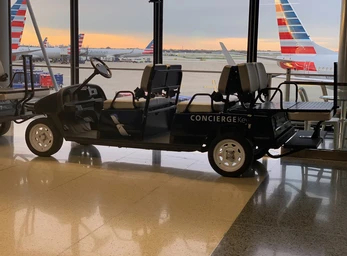
Modern electric utility vehicles equipped with AC motor systems deliver superior torque and hill-climbing capability — a performance edge that matters enormously in demanding industrial environments.
As Golf Course Management Magazine notes, AC motor technology outperforms older DC systems on precisely the metrics industrial operators care about: sustained torque under load, thermal efficiency, and long-term durability. For high-cycle applications — think repeated starts, stops, and grade changes across a sprawling campus — this translates into fewer motor replacements and more reliable uptime. You can explore how electric cart specs translate to real-world performance across different deployment environments.
These operational advantages don’t exist in a vacuum, of course. The real payoff becomes visible when you map them against specific deployment scenarios — exactly what the next section explores.
Strategic Applications: From Resort Guest Shuttles to Industrial Logistics
The TCO advantages covered earlier only tell part of the story. The real power of modern electric utility vehicles lies in their adaptability — the same platform that ferries hotel guests to a beachfront pool can, with minimal modification, move tools across a 500-acre manufacturing campus. That versatility is fueling demand across sectors, contributing to a projected CAGR of 6.3% for the global electric golf cart market through 2030.
Resorts and Hospitality: Silent Service at Scale
In guest-facing environments, noise and emissions aren’t just inconveniences — they’re brand problems. Multi-passenger configurations (typically 6–10 seats) enable resorts and hotel campuses to:
- Shuttle guests between lodges, dining venues, and recreational areas without disrupting the atmosphere
- Transport luggage and equipment alongside passengers using convertible rear cargo decks
- Operate overnight near guest rooms without sound ordinance concerns
- Maintain service during peak hours with fast turnaround between charges
Quiet, high-capacity transport isn’t a luxury upgrade — it’s a competitive differentiator in hospitality.
Industrial Parks: Moving People Efficiently at Scale
Large industrial campuses present a genuine logistics challenge: getting personnel from parking structures to worksites, between buildings, or to safety muster points — fast. Multi-passenger electric vehicles address this directly:
- 6–12 seat configurations reduce the number of vehicles needed per shift
- Scheduled campus loops cut average transit time significantly
- Low operating costs make high-frequency runs financially practical
- In mixed-use developments, street-legal-rated models can cross public roadways connecting adjacent facilities
Material Handling: The A-Type Frame as a Workhorse
Beyond personnel, the A-Type utility frame adapts naturally to light-duty cargo missions:
- Tool and parts delivery between production lines or maintenance bays
- Flatbed and enclosed cargo body configurations for equipment transport
- Tow-hitch setups capable of pulling supply carts and trailers
- Ergonomic loading heights that reduce worker strain compared to traditional transport options
Seeing these configurations in motion — particularly how they handle real-world terrain, tight turning corridors, and varying load conditions — reveals capabilities that specs alone can’t fully communicate.
Visualizing Performance: A-Type Utility in Action
Watch for the smooth, tight turning radius as the vehicle navigates warehouse corners loaded to capacity. Notice how quietly it moves through a facility floor — no engine noise, no exhaust. Pay attention to the plug-in charging sequence, which takes seconds to initiate at the end of a shift.
Seeing multi-passenger electric carts perform in real operational environments removes a lot of the guesswork. In practice, a compact wheelbase combined with a responsive electric drivetrain delivers a turning radius tight enough for loading docks and crowded corridors alike. Payload capacity — often 800 lbs or more — handles both personnel and equipment simultaneously.
Quiet operation isn’t just a comfort feature; it’s a genuine productivity advantage in hospitals, libraries, and resort properties where noise disrupts guests or patients. And daily charging is straightforward enough that most operators plug in at shift end without any specialized training. That operational simplicity directly shapes how well fleets hold up over time — which is exactly where maintenance strategy becomes critical.
Optimizing Fleet Longevity: Maintenance Best Practices
Protecting your investment in industrial campus logistics comes down to consistency. The vehicles covered in previous sections can deliver years of reliable service — but only when operators follow disciplined maintenance routines. Cutting corners here is where total cost of ownership projections fall apart.
The Battery Care Golden Rules
- Water before charging, not after. Add distilled water only when cells are fully charged to avoid overflow and acid dilution.
- Stick to a watering schedule. In high-cycle industrial environments, check electrolyte levels every 10–15 operating days minimum.
- Avoid deep discharges. Repeatedly draining below 20% capacity dramatically shortens deep-cycle battery lifespan.
- Keep terminals clean and corrosion-free. A simple baking soda solution applied monthly prevents resistance buildup that strains the entire electrical system.
- Store at partial charge during extended downtime. Full discharge during storage is one of the most common — and preventable — causes of premature battery failure.
According to Golf Cart Report, regular watering and disciplined charge cycle management are the primary factors determining how long deep-cycle batteries last in industrial utility carts. There’s no shortcut around either.
⚠️ Battery Safety Warning: Never charge in enclosed spaces without ventilation. Hydrogen gas released during charging is flammable. Always inspect for swelling, cracks, or leakage before each shift.
Preventative Maintenance and Driver Training
Beyond batteries, schedule monthly inspections covering brake wear, tire pressure, and controller diagnostics. High-use campus vehicles can log 30–50 miles daily — comparable to light commercial use — so treat them accordingly.
Training staff on regenerative braking is equally valuable. Encouraging smooth, gradual deceleration instead of hard stops recaptures energy and reduces brake pad wear simultaneously. Small driving habit changes translate directly into measurable fleet savings over time.
When you’re ready to build a fleet that’s designed for durability from the ground up, the right procurement partner makes all the difference — which is exactly what the next section addresses.
Future-Proofing Your Facility with Varyon Solutions
Smart procurement decisions don’t happen in isolation. After establishing strong maintenance routines and understanding real-world performance, the next logical step is choosing a supplier who can grow with your operation — not just fulfill a single order.
Varyon delivers exactly that kind of long-term partnership. With decade-long manufacturing reliability and proven global export expertise, the brand brings consistency that procurement teams can depend on year after year.
Here’s what sets Varyon apart as a strategic fleet partner:
- Complete portfolio coverage — source both passenger transport and material handling equipment through a single vendor, reducing procurement complexity
- Flexible configurations — 2-seat runabouts to 12+ seat shuttles, with customization options tailored to your facility’s layout and workflow
- Export-ready operations — established logistics infrastructure supporting international orders without lead-time surprises
- Scalable ordering — whether you’re expanding a single campus or outfitting multiple sites, fleet scaling is straightforward
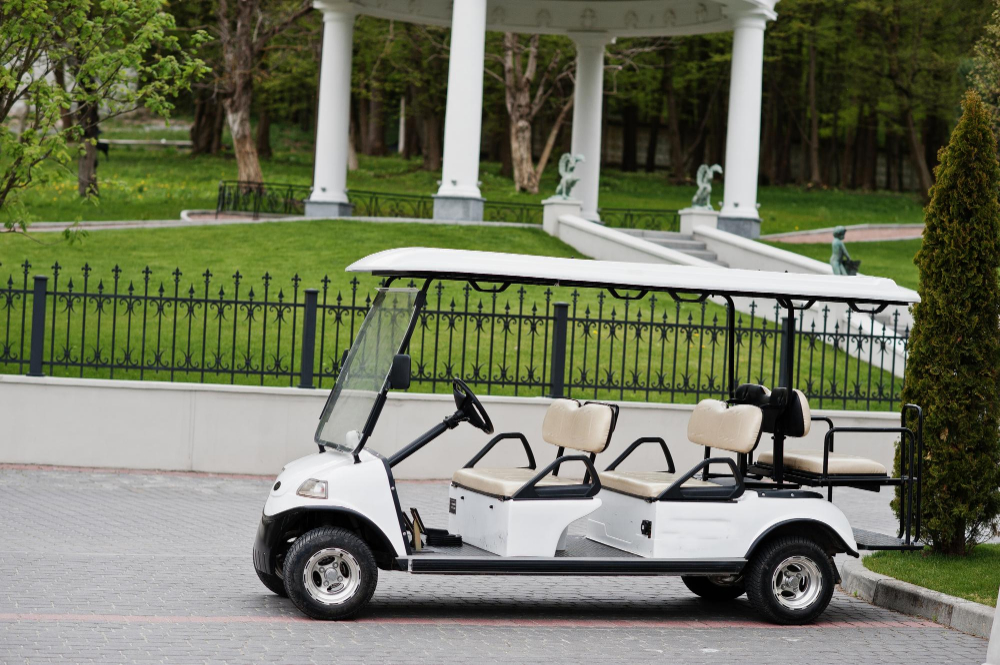
If your campus operates across state lines or public-adjacent roads, it’s also worth understanding how street-legal compliance works before finalizing your configuration.
Explore the full A-Type utility vehicle lineup to match the right model to your operational needs — and keep reading for answers to the questions facility managers ask most.
Frequently Asked Questions About Industrial Electric Fleets
Are these vehicles street legal for campus use?
It depends on local regulations and how the vehicle is configured. Many multi-passenger electric utility vehicles qualify as Low-Speed Vehicles (LSVs) when equipped with required safety features — lights, mirrors, seat belts, and a VIN. Private campuses typically operate under different rules than public roads. If your routes cross public streets, check your state’s specific requirements. Keep in mind that enclosures and accessories must not obstruct required safety equipment on street-legal units.
What is the typical range for a fully loaded 12-seater?
Most lithium-powered 12-passenger models deliver 40–60 miles per charge under full load. Terrain, climate, and driving behavior all affect real-world range.
How do AC motors compare to DC motors in hilly terrain?
AC motors provide stronger regenerative braking and more consistent torque on inclines — a meaningful advantage on uneven campuses. DC motors cost less upfront but often underperform on repeated grades.
What is the lead time for custom fleet orders?
Standard configurations typically ship within 4–8 weeks. Custom builds — branded livery, specialized cargo beds, or unique seating layouts — generally run 10–14 weeks. Planning ahead protects your operational timelines.
The right industrial electric fleet isn’t just a purchase — it’s infrastructure. Explore practical upgrades and fleet solutions to maximize every vehicle’s value from day one.
Key Takeaways
- No oil changes, filters, or fluid flushes
- No spark plugs, timing belts, or exhaust system repairs
- Fewer brake replacements due to regenerative braking
- Significantly reduced labor hours for routine servicing
- Shuttle guests between lodges, dining venues, and recreational areas without disrupting the atmosphere