
The vehicle parked outside your resort loading dock or warehouse bay looks nothing like the wobbly cart your grandfather drove between holes. Today’s B-Type electric utility vehicles are purpose-built industrial assets — and in 2026, facilities that haven’t made the switch are already falling behind.
The global electric golf cart market is projected to reach $2.55 billion by 2030, fueled by smart city development and eco-conscious tourism demand, according to Grand View Research. That growth isn’t coming from weekend golfers — it’s coming from operations managers who need zero-emission transport that actually works.
The B-Type series sits at a precise intersection: passenger-grade comfort paired with genuine material-handling muscle. Think ergonomic seating alongside payload capacity, or resort-friendly aesthetics bolted onto a frame engineered for industrial punishment. Then vs. now — “then” was a leisure vehicle tolerating light duty; “now” is a multi-role utility asset replacing forklifts and shuttle buses simultaneously.
Zero-emission mandates are accelerating this conversion. Resorts, industrial parks, and campuses face mounting regulatory pressure to eliminate combustion vehicles from enclosed or high-traffic zones entirely.
Questions like how long do golf cart batteries last are increasingly central to procurement decisions — and the answer depends almost entirely on battery chemistry. That’s a conversation worth having in depth, and it starts with understanding why lithium systems are rewriting the rules for facility operators everywhere.
The Lithium Revolution: Solving the Battery Longevity Puzzle
The transformation discussed in the previous section — from recreational carts to serious utility assets — only holds up if the power source can match the demand. That’s exactly where lithium-ion technology has rewritten the rulebook for facility operators in 2026.
One of the most common questions buyers ask is: how long do golf cart batteries last? The honest answer depends entirely on chemistry. Here’s how the two main options stack up:
Cycle Comparison: Lead-Acid vs. Lithium-Ion
- Lead-acid batteries: 500–1,000 charge cycles before significant capacity degradation
- Lithium-ion batteries: 3,000–5,000 charge cycles under comparable conditions, according to Battery University (Cadex Electronics)
- Practical lifespan difference: Lithium typically lasts 4–6x longer before replacement is necessary
- Depth of discharge: Lithium handles 80–100% discharge without damage; lead-acid degrades rapidly below 50%
For a facility running vehicles across multiple daily shifts, that cycle gap translates directly into replacement costs avoided and operational continuity gained. A lithium golf cart doesn’t just last longer — it performs more consistently from the first charge to the thousandth.
The energy savings story is equally compelling. Electric utility vehicles can reduce operational energy costs by up to 75% compared to internal combustion engine counterparts, according to the U.S. Department of Energy. Combined with fewer battery replacements, the long-term economics strongly favor lithium systems.

Fast-charging capability further strengthens the case. Modern lithium packs can reach operational charge levels in 2–4 hours, minimizing downtime between shifts. For facilities where vehicle availability is directly tied to productivity, that’s a meaningful advantage. You can explore how battery chemistry affects cart performance to better understand why this matters across different use cases.
Reliable power is only half the equation — the next piece involves the physical platform carrying that power. That brings us to the engineering decisions behind the chassis itself.
Engineering for Torque: Why B-Type Chassis Matter in Material Handling
With lithium power solving the energy equation, the next question is structural: can the vehicle itself handle the demands of real industrial work? For B-Type utility vehicles, the answer starts at the motor — and it’s a compelling one.
Torque That Works From a Dead Stop
Unlike gas-powered alternatives, electric motors deliver peak torque at zero RPM. That means the moment you apply throttle, full pulling force is already available — no revving, no lag, no warming up. As Green Car Reports notes, this characteristic makes electric motors fundamentally more efficient than combustion engines when transporting heavy materials across hilly or uneven terrain. For warehouse loading areas, resort pathways, or agricultural yards with grade changes, that instant torque translates directly into safer, smoother hauling.
Chassis Built for the Long Haul
The B-Type designation isn’t just marketing — it signals a purpose-engineered frame. These vehicles are designed to comfortably accommodate 8 to 12 passengers or equivalent cargo weight, using reinforced steel chassis geometry that distributes load stress more evenly than standard recreational models. That structural integrity is what separates them from even the most affordable golf carts on the market, which typically cap out far below these load ratings.
Safety engineering follows the same logic. Hydraulic braking systems replace basic mechanical setups, providing consistent stopping power even under maximum payload. Reinforced frame joints reduce flex during cornering, protecting both cargo and passengers. If you’re evaluating long-term operational value, understanding how chassis quality affects resale is equally worth considering.
All of this mechanical groundwork creates a platform ready for the next evolution: advanced customization that matches your specific operational needs.
Customization Trends You Need to Know for 2025-2026
With structural integrity and power efficiency addressed, today’s forward-thinking golf cart manufacturer is shifting attention to what operators and facility managers actually see, touch, and manage daily. The customization landscape for 2025-2026 is moving fast — and the trends shaping B-Type electric utility vehicles go well beyond paint color choices.
Here are five trends defining the next generation of facility vehicles:
- Eco-friendly interior materials. Recycled textiles, bio-based foam seating, and low-VOC finishes are replacing conventional plastics. According to Lifestyle Golf Carts / Varyon Research, modern B-Type carts are actively incorporating sustainable interior materials as standard — not optional — specifications.
- Smart fleet connectivity. GPS tracking, real-time diagnostics, and geofencing capabilities are now being integrated directly into utility vehicle platforms. Facility managers can monitor battery health, location, and usage patterns from a single dashboard, dramatically reducing downtime.
- Modular seating and cargo configurations. Operators no longer need separate vehicles for passengers and payloads. Flip-and-lock seat systems allow rapid conversion between crew transport and flatbed cargo modes — ideal for multi-use facilities. If you’re evaluating long-term value, understanding what drives ownership costs makes configuration flexibility even more compelling.
- Climate-controlled cab options. Showcased prominently at the 2026 PGA Show, enclosed cabs with heating and cooling extend year-round operational windows significantly.
- Smart-city infrastructure compatibility. Vehicles are increasingly designed to integrate with facility-wide IoT networks, enabling automated dispatch and predictive maintenance.
The vehicles that win in 2026 won’t just work harder — they’ll work smarter. These innovations set a direct foundation for how real-world operations across resorts, industrial parks, and campuses are already putting them to work.
Operational Excellence in Action
The customization and structural advantages covered earlier only deliver real value when they’re tested in the field. Across two very different environments—luxury resorts and busy industrial parks—B-Type electric utility vehicles are proving their worth daily.
Resort Logistics: Silent, Seamless Guest Experiences
Resorts face a specific challenge: moving guests, luggage, and supplies without disrupting the atmosphere guests are paying a premium for. B-Type vehicles solve this quietly—literally. Their electric drivetrains produce minimal noise, gliding through lobbies, garden pathways, and poolside corridors without the exhaust fumes or engine rumble of conventional alternatives. Beyond the fairway, eco-tourism operators are already documenting how electric utility vehicles enhance guest satisfaction while cutting fuel costs simultaneously.
Industrial Parks: Nimble Beats Heavy
In warehouse corridors and sprawling industrial campuses, heavy trucks are often overkill. B-Type vehicles offer a smarter middle ground—enough payload capacity for parts, tools, and equipment, with the agility to navigate tight loading bays. Designed for one-stop procurement, Varyon Machinery’s B-Type series bridges sightseeing and material handling in a single platform, giving facility managers flexibility without managing two separate fleets.
Safety First: The Features That Matter Most
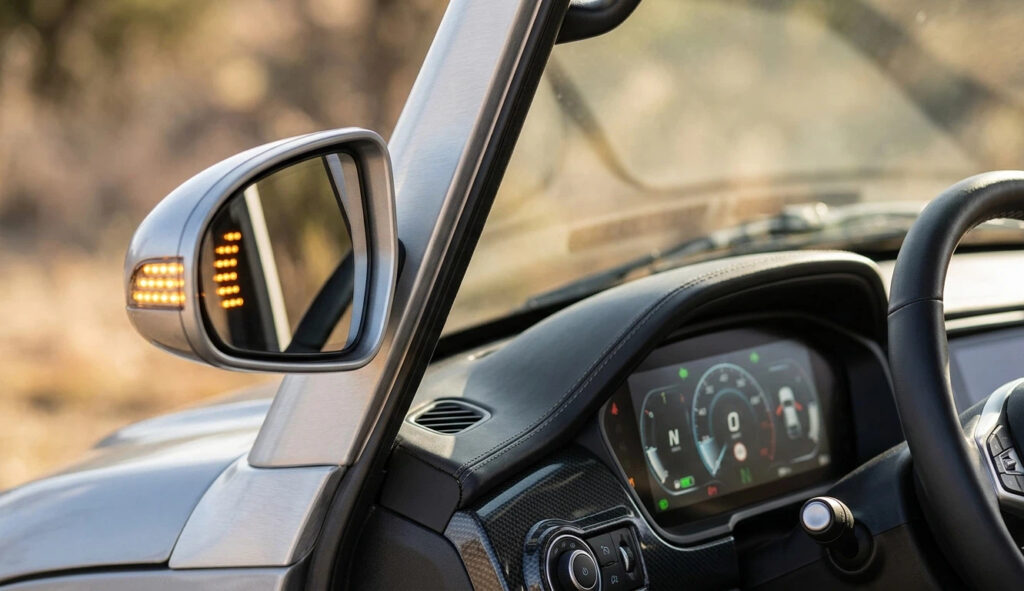
Golf cart safety features have advanced considerably, and modern manufacturers aren’t cutting corners. Disc brakes deliver consistent stopping power under loaded conditions, while full LED lighting systems ensure visibility during early-morning or overnight shifts. On the other hand, facilities that overlook these specs often discover the true cost later—through liability exposure and maintenance cycles.
The vehicles that protect workers are the ones worth investing in.
Still have questions about specifications, road legality, or battery maintenance? The next section tackles the most common queries directly.
Frequently Asked Questions About B-Type Utility Vehicles
What’s the difference between a standard golf cart and a B-Type utility vehicle?
A standard golf cart is designed primarily to move passengers across manicured turf with minimal cargo capacity. A B-Type utility vehicle, by contrast, is engineered as a true material handling transportation solution — featuring reinforced frames, higher payload ratings, modular bed configurations, and purpose-built electrical systems suited for demanding commercial environments. The distinction matters most when facilities need reliable, multi-shift performance beyond the fairway.
Can B-Type utility vehicles be used on public roads?
In many cases, yes. Many states now permit Low-Speed Vehicles (LSVs) on roads with speed limits up to 35 mph, provided the vehicle meets federal equipment standards including headlights, seat belts, and mirrors. However, LSV regulations vary by state and municipality, so operators should always verify local requirements before deploying fleet vehicles on public roadways.
How do I maintain a lithium battery for maximum service life?
Avoid consistently charging to 100% or draining below 20% — staying within a 20–80% charge window significantly extends cell longevity. Keeping batteries at moderate temperatures and using a compatible charger are equally important habits. For a deeper look at long-term battery ownership costs, lithium’s reduced maintenance demands consistently outperform lead-acid alternatives over a 10-year horizon.
What safety features should I prioritize for a commercial fleet?
Look for vehicles with automatic parking brakes, speed governors, roll-over protection structures (ROPS), and high-visibility lighting as baseline requirements. Regenerative braking systems add an extra layer of control on slopes, while integrated Battery Management Systems (BMS) prevent overcharge events that create fire risk. A well-specified commercial fleet isn’t just productive — it’s the kind of investment that protects both people and assets for years to come.
Key Takeaways
- Lead-acid batteries: 500–1,000 charge cycles before significant capacity degradation
- Lithium-ion batteries: 3,000–5,000 charge cycles under comparable conditions, according to Battery University (Cadex Electronics)
- Practical lifespan difference: Lithium typically lasts 4–6x longer before replacement is necessary
- Depth of discharge: Lithium handles 80–100% discharge without damage; lead-acid degrades rapidly below 50%
- Smart-city infrastructure compatibility. Vehicles are increasingly designed to integrate with facility-wide IoT networks, enabling automated dispatch and predictive maintenance.