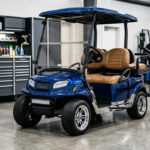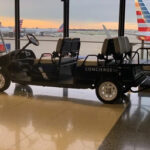
The moment a guest steps off a transfer vehicle and onto resort grounds, the experience has already begun. That first impression — quiet, clean, seamless — sets the tone for everything that follows. Across the hospitality industry, properties that still rely on rumbling, exhaust-heavy internal combustion engine (ICE) vehicles are discovering a hard truth: noise and air quality aren’t amenity details. They’re competitive differentiators.
Internal combustion engines are losing ground fast in guest-facing environments. The emissions, maintenance demands, and acoustic footprint of gas-powered carts simply don’t align with the premium expectations of today’s resort guest. Properties operating ICE fleets also face rising fuel costs and increasingly strict emissions regulations — pressures that compound year over year. Switching to an electric golf cart for resorts isn’t just an environmental gesture; it’s a financially sound operational decision. According to the U.S. Department of Energy’s Alternative Fuels Data Center, electric utility vehicles can reduce operational energy costs by up to 75% compared to their ICE counterparts.
Defining Micro-Mobility at Scale
In large-scale resort environments, micro-mobility refers to the deployment of small, low-speed electric vehicles to move guests and materials efficiently across property — eliminating the need for full-size buses on internal routes. According to McKinsey & Company’s Future of Mobility Report, multi-seater electric shuttles carrying 6 to 12 passengers are increasingly central to these strategies, reducing internal congestion while preserving the ambiance properties work hard to create.
The B-Type multi-seater configuration — typically spanning 6 to 12-plus seats — represents the backbone of this approach. These vehicles bridge the gap between individual cart transport and coach-style shuttling, offering flexible capacity for everything from airport-style drop-off loops to poolside transfers. For properties exploring modernization, even aging vehicle fleets can be revitalized; upgrading to lithium power is one practical starting point before committing to a full fleet replacement.
The quietest resort on the block isn’t cutting corners — it’s setting the standard. Before implementing any fleet strategy, though, the first step is understanding exactly what your property needs. That means conducting a thorough audit of your transportation and material handling requirements — and that’s precisely where we’ll begin.
Step 1: Auditing Your Facility’s Transportation and Material Handling Needs
Before investing in a single vehicle, resort operators need a clear picture of what the fleet actually has to do. As established in the previous section, the shift to electric mobility is no longer optional — but the vehicles you choose must match your operational reality, not just your sustainability goals.
Mapping Guest Flow and Staff Transit Routes
Start by documenting every route on the property during peak occupancy periods. Walk the grounds during a busy weekend and track where guests wait, where staff move supplies, and where bottlenecks form. Identify the highest-traffic corridors — arrival drop-off zones, pool areas, dining venues, and accommodation wings — and note the frequency of each run.
A common pattern in mid-to-large resort operations is that guest shuttle routes and staff transit paths overlap significantly during morning and evening hours, creating scheduling conflicts when the fleet is undersized or poorly allocated.
Identifying Dual-Purpose Needs
Many resorts underestimate how much overlap exists between passenger shuttling and material handling transportation solutions — the movement of luggage, linens, housekeeping carts, food service equipment, and maintenance supplies. Treating these as separate problems leads to fleet redundancy and wasted capital.
A practical audit question: Could a larger-format B-Type vehicle serve both a guest run and a supply delivery on the same loop? In many cases, the answer is yes — with the right vehicle spec.
Calculating Seat Capacity: B-Type vs. Standard 4-Seaters
Use this audit table to match your route data to the right vehicle configuration:
| Route Type | Load Requirement | Recommended Vehicle |
|---|---|---|
| Main arrival/departure corridor | 8–14 passengers + luggage | B-Type high-capacity shuttle |
| Pool-to-restaurant loop | 4–6 passengers, low cargo | Standard 4–6 seat electric cart |
| Housekeeping/supply runs | Primarily cargo, 1–2 staff | Utility flatbed or cargo electric vehicle |
| Mixed guest + luggage transfer | 6–8 passengers + bags | Mid-size shuttle with rear cargo bay |
High-capacity vehicles reduce trip frequency — a measurable operational advantage when staff time and battery cycles both carry a cost.
Verification Checkpoint: Charging Infrastructure Readiness
Before finalizing any vehicle count, audit your electrical infrastructure. Key questions include: How many Level 2 charging stations are currently installed?, What’s the overnight dwell time available per vehicle?, and Can your current electrical panel support additional load? The International Energy Agency notes that the shift toward electric utility vehicles in commercial sectors is driven by the dual demand for zero-emission targets and lower maintenance — but that transition stalls without adequate charging capacity in place.
Once your operational needs are mapped and your infrastructure gaps identified, the next step is understanding how 2025’s customization landscape can elevate both performance and guest-facing aesthetics.
Step 2: Navigating 2025 Customization Trends for Performance and Aesthetics
Once you’ve completed your facility audit, the next challenge is translating those operational needs into a vehicle spec that guests will actually notice and appreciate. The golf cart customization trends 2025 are moving well beyond white fiberglass bodies and basic bench seats — and resort operators who lean into that shift are seeing measurable gains in perceived property value and guest satisfaction.
Aesthetics: Beyond the Basic White Cart
The standard utility cart look is no longer acceptable at mid-range or luxury properties. Today’s customization options rival light automotive design in their scope:
- Custom body wraps and paint matched to resort branding or seasonal themes
- Premium upholstery in weatherproof vinyl, faux leather, and UV-resistant fabric
- Integrated ambient lighting along footwells and canopy rails for evening operations
- Tiered seating configurations — forward-facing, club-style, or convertible layouts depending on guest load
- Branded canopies and roof structures with resort logos, destination signage, or seasonal graphics
A thoughtfully designed shuttle reinforces the resort’s identity from the moment guests board. In practice, properties that invest in vehicle aesthetics report stronger social media engagement as guests photograph and share their arrival experience organically.
Smart Tech Integration: GPS, Fleet Management, and Digital Displays
Technology is rapidly becoming the most competitive differentiator in resort fleet management. What’s now standard across upgraded fleets includes:
- GPS tracking and geofencing to monitor vehicle location, enforce route boundaries, and optimize dispatch in real time
- Fleet management software dashboards that consolidate vehicle health data, utilization rates, and service alerts into a single operator interface
- In-vehicle digital displays for wayfinding, amenity promotions, and multilingual guest communications
- QR code integration on seat backs linking to resort maps, dining reservations, and activity booking
With the global electric golf cart market projected to grow at a CAGR of 6.3% through 2030, driven substantially by eco-tourism expansion, technology adoption is accelerating across all price tiers. Smart fleets aren’t a luxury add-on — they’re quickly becoming the baseline expectation.
Performance Upgrades: Power, Efficiency, and All-Season Reliability
Aesthetic and tech upgrades mean little if the vehicle underperforms on the route. Key performance specifications to prioritize in 2025:
- Lithium-ion battery systems offering 25–40% longer range per charge compared to traditional lead-acid alternatives, with faster recharge cycles
- Regenerative braking technology that recaptures kinetic energy on downhill terrain — particularly valuable for hillside or mountainous resort layouts
- Heavy-duty suspension packages calibrated for uneven terrain, packed pathways, and multi-passenger loads
- IP-rated weatherproofing on electrical components, sealed motor housings, and rust-resistant chassis coatings for all-season operations in rain, snow, or high humidity
However, it’s worth noting that premium performance packages add upfront cost, and not every route demands the highest spec. Matching battery capacity and weatherproofing grade to your specific operational environment — rather than over-specifying across the board — is the smarter budget strategy.
With the passenger-side of your fleet taking shape, the next critical consideration is how your material handling requirements fit into the same procurement strategy.
Step 3: Integrating Material Handling into Your Fleet Strategy
With your operational audit complete and your customization specs mapped out, the next strategic move is expanding your thinking beyond passenger transport. A truly efficient resort fleet doesn’t just move guests — it moves everything else that keeps your property running.
The Role of Electric Forklifts and Pallet Trucks in Resort Logistics
Behind every seamless guest experience is an invisible supply chain: linen deliveries, F&B restocking, landscaping equipment, event staging materials. Electric forklifts and pallet trucks are the backbone of that operation. Unlike their gas-powered counterparts, electric material handling vehicles produce zero on-site emissions, run quietly near guest-facing areas, and — critically — have fewer moving parts, which directly translates to higher uptime and reduced maintenance costs for large fleets, as noted in the International Energy Agency’s Global EV Outlook.
Reduced mechanical complexity means fewer service interruptions during peak season — exactly when you can least afford equipment downtime.
One-Stop Procurement: Why Unified Fleets Reduce Complexity
Sourcing your passenger shuttles, utility carts, and material handling vehicles from a single supplier ecosystem creates compounding operational advantages. Shared battery platforms, compatible charging infrastructure, and consolidated service agreements all reduce the administrative burden on your facilities team. Staff trained on one system can troubleshoot across vehicle categories, and parts inventory becomes far more manageable.
A common pattern in resort operations is that fragmented fleets — assembled from multiple vendors over several years — quietly inflate total cost of ownership through duplicated maintenance contracts and incompatible charging setups. Unified procurement eliminates that friction from day one.
Customizing B-Type Vehicles for Dual-Use Configurations
One of the more practical 2025 fleet strategies involves specifying B-Type utility vehicles for dual-use roles. These platforms can be configured to shift between passenger and cargo modes depending on the time of day or seasonal demand. During morning hours, the same vehicle that shuttles guests from the parking structure can be reconfigured to transport supplies to poolside cabanas.
This flexibility complements your multi-seater electric shuttles by reducing the total number of vehicles required while maximizing utilization per unit — a key metric for demonstrating ROI to ownership and management.
Verification Checkpoint: Load Capacity and Safety Compliance
Before finalizing any dual-use configuration, operators should conduct a formal load capacity review against OSHA material handling guidelines and any applicable local regulations. Key checkpoints include:
- Maximum payload ratings for both passenger and cargo modes
- Tie-down and restraint systems for transported goods
- Brake performance ratings under full load conditions
- Operator certification requirements for forklift-category vehicles
Skipping this step is one of the most common — and costly — oversights in fleet expansion projects.
With your material handling strategy integrated into the broader fleet plan, the next logical question becomes longevity: how do you build a fleet that performs just as well in 2027 as it does today? That’s where future-proofing technology enters the picture.
Step 4: Future-Proofing for 2026: Upgrades That Improve Long-Term ROI
With your fleet strategy and customization roadmap already in place, the final planning step is identifying which capital investments will deliver the strongest returns over the next 24 months. According to Intermountain Golf Cars Research, top upgrades for 2026 focus on improving both performance and passenger comfort through advanced drivetrain technology — a signal that the industry is accelerating fast. Smart fleet managers treat upgrades not as expenses, but as compounding assets that reduce operating costs while elevating guest satisfaction.
Here are the top five ROI-generating upgrades to prioritize:
Top 5 ROI Upgrades for Resort Electric Fleets
1. Advanced Suspension Systems Off-road resort terrain — think gravel paths, uneven fairways, and hillside access routes — creates significant wear on standard chassis components. Upgrading to independent rear suspension or hydraulic lift kits extends vehicle lifespan, reduces maintenance intervals, and delivers a noticeably smoother ride for guests. In practice, resorts operating across mixed terrain report fewer drivetrain complaints and lower quarterly repair costs after this single upgrade.
2. Modular Seating Configurations Seasonal demand swings are a reality at every resort. Modular bench and flip-seat systems allow the same vehicle to transition from a 12-passenger shuttle during peak summer events to a cargo-plus-seating hybrid during slower off-seasons. This flexibility eliminates the need for dedicated specialty vehicles and reduces fleet size requirements.
3. IoT-Enabled Diagnostic Tools Predictive maintenance is no longer a luxury — it’s a cost-control strategy. IoT-connected diagnostics monitor battery health, motor temperature, brake wear, and tire pressure in real time, flagging issues before they become roadside failures. One practical approach is integrating these tools with a central fleet dashboard, allowing a single operations manager to monitor an entire fleet remotely.
4. Regenerative Braking Upgrades Enhanced regenerative braking systems recapture kinetic energy on downhill terrain — particularly valuable at mountain and hillside resorts — extending range between charges and reducing brake pad replacement frequency.
5. Upgraded Lithium Battery Packs Higher-capacity lithium systems deliver longer daily range and faster charging cycles, directly reducing downtime during shift transitions.
Solar Integration Callout: The High-ROI Addition You Shouldn’t Overlook
Solar-assisted charging roofs represent one of the most compelling upgrades for eco-friendly utility vehicles operating in high-sunlight environments. Roof-mounted solar panels can contribute meaningful supplemental charge throughout an operational day, extending range by reducing draw on the primary battery pack. For resorts in sun-rich climates, the payback period on solar roof panels typically falls within two to three operating seasons.
Each of these upgrades compounds in value when layered together — and seeing how they perform in real-world resort environments makes the case even more compellingly. The next section puts these capabilities in full visual context.
Visual Guide: Modern Electric Fleet Operations in Action
Understanding the strategic value of high-capacity electric shuttles is one thing — seeing them in motion across a real resort environment is another entirely. The video below offers a practical walkthrough of multi-seat electric fleet operations, demonstrating how these vehicles perform across varied terrain, guest-loading scenarios, and back-of-house routes.
[VIDEO PLACEHOLDER: Resort Electric Shuttle Fleet Operations — Multi-Seat Walkthrough]Recommended embed: YouTube walkthrough demonstrating 8–12 seat electric shuttle deployment in a hospitality or campus setting.
Scale is immediately apparent in any visual demonstration of this fleet category. An 8–12 seat shuttle occupies a footprint that bridges the gap between a standard golf cart and a full transit bus — large enough to move meaningful guest volume per trip, yet nimble enough to navigate resort pathways and covered drop-off zones without special infrastructure. In practice, a single 12-seat vehicle can eliminate three to four smaller cart runs during peak check-in periods, compressing wait times and reducing pathway congestion simultaneously.
What the video also captures — and what’s difficult to convey in specs alone — is quiet operation at work. Electric drivetrains produce a fraction of the noise generated by gas-powered alternatives, preserving the ambient atmosphere that resort guests pay a premium to experience. Transdev’s multi-year contract renewal with Winter Park underscores this principle: in premium leisure environments, seamless, low-impact mobility isn’t optional — it’s a brand expectation.
These visual benchmarks naturally raise practical questions about day-to-day fleet management, which the following section addresses directly.
Expert Insights and Frequently Asked Questions
Procurement teams and resort operations directors consistently raise the same core questions before committing to a high-capacity electric shuttle fleet. Here are detailed, evidence-backed answers to the most common concerns.
How long do lithium batteries last in high-use resort environments?
In high-cycle resort applications — where shuttles run continuous loops from early morning through late evening — lithium iron phosphate (LiFePO4) battery packs typically deliver 2,000 to 3,000 full charge cycles before capacity drops below 80%. In practice, that translates to seven to ten years of reliable service under daily operation. Thermal management systems and smart battery monitoring help extend that lifespan significantly, particularly in mountain resort environments where temperature swings are extreme. Proper charging discipline — avoiding full depletion before recharging — remains the single most impactful factor in long-term battery health.
What is the typical lead time for customized B-Type fleets?
Standard B-Type electric shuttle configurations generally ship within 8 to 14 weeks from order confirmation. However, heavily customized builds — branded wraps, ADA lifts, specialized seating configurations, or integrated telematics — can extend lead times to 16 to 20 weeks. Resorts planning seasonal fleet expansions should place orders at least one full quarter ahead of peak demand periods to avoid operational gaps.
Can these vehicles be used on public roads or just private campuses?
Many high-capacity electric shuttles are low-speed vehicles (LSVs) rated for roads posted at 35 mph or below, making them suitable for resort access roads, village loops, and mixed-use pathways. For properties requiring public road access above those thresholds, full street-legal configurations are available and increasingly supported by municipal policy — as reflected in First and Last Mile Connectivity planning frameworks now adopted across multiple states.
What are the maintenance requirements compared to gas-powered fleets?
Electric fleets eliminate oil changes, transmission service, and exhaust system repairs entirely. Routine maintenance centers on tire rotation, brake inspection, and battery system diagnostics — reducing annual service costs by an estimated 30 to 40% versus comparable gas-powered vehicles. According to Circuit’s 2025 operational data, electric fleet operators consistently report fewer unplanned downtime events, which directly protects revenue during peak guest traffic periods.
The bottom line: transitioning to a high-capacity electric shuttle fleet is no longer a speculative investment — it’s a measurable operational upgrade that delivers cleaner guest experiences, lower lifecycle costs, and a stronger sustainability narrative for years ahead. Start with a property mobility audit, define your peak-load requirements, and build a phased procurement plan that positions your resort for 2026 and beyond.
Key Takeaways
- Custom body wraps and paint matched to resort branding or seasonal themes
- Premium upholstery in weatherproof vinyl, faux leather, and UV-resistant fabric
- Integrated ambient lighting along footwells and canopy rails for evening operations
- Tiered seating configurations — forward-facing, club-style, or convertible layouts depending on guest load
- Branded canopies and roof structures with resort logos, destination signage, or seasonal graphics