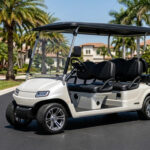
Electric vehicles on facility floors have stopped being a statement about sustainability and started being a statement about performance. The facilities that are pulling ahead in 2025 aren’t switching from combustion to electric because of a mandate — they’re doing it because electric simply works better.
As Modern Materials Handling noted, “the shift toward electrification in material handling is no longer just about sustainability; it’s about the superior torque and precision control.” That distinction matters. When a technology wins on operational merit, adoption accelerates — and the electric utility vehicle market is projected to reflect exactly that trajectory through 2030.
Modern facilities don’t move one thing — they move everything. People, parts, inventory, and equipment all travel through the same spaces, often simultaneously. That reality demands multi-modal transport capability — a fleet flexible enough to handle both personnel movement and goods handling without operational gaps.
This is where the concept of Operational Excellence reframes the entire fleet conversation. Rather than evaluating vehicles in isolation, leading facilities and every forward-thinking material handling equipment supplier are assessing total fleet performance: uptime, throughput, and cost-per-hour. The sections ahead break down exactly what that math looks like.
The ROI of Electrification: Analyzing Total Cost of Ownership
Switching to electric utility vehicles isn’t just an operational upgrade — it’s a financial decision that compounds in value over time. While the upfront investment may give procurement officers pause, the long-term numbers tell a compelling story that’s hard to ignore.
The most immediate savings come from eliminating fuel entirely. With no gasoline or diesel to purchase, daily operational costs drop significantly from day one. Beyond fuel, electric drivetrains have far fewer moving parts than combustion engines — no oil changes, no spark plugs, no exhaust systems. According to the U.S. Department of Energy, electric utility vehicles significantly reduce operational costs through lower maintenance requirements and the complete absence of fuel expenses.
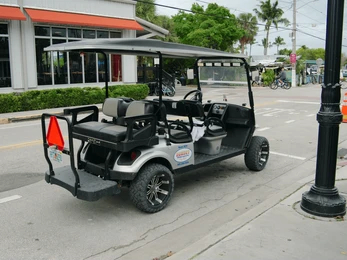
Battery technology is where the long-term calculus really shifts. Lithium-ion systems have a clear financial edge over traditional lead-acid batteries. According to Logistics Management, lithium-ion batteries in material handling equipment can deliver up to a 40% reduction in total cost of ownership (TCO) compared to older alternatives. Key advantages include:
- Longer cycle life — lithium-ion batteries typically last 2–3x longer before replacement
- Faster charge times — opportunity charging between shifts reduces downtime
- No maintenance watering — unlike lead-acid, lithium cells require minimal upkeep
- Consistent power output — no performance drop as charge depletes
Uptime is a hidden cost center that’s easy to overlook. Every hour a vehicle spends charging or in the shop is lost productivity. Faster charging cycles mean vehicles return to rotation quicker, directly impacting throughput.
Pro-Tip: When evaluating battery options, confirm that your chosen golf cart manufacturer offers integrated lithium-ion support — not just a retrofit solution. Native lithium compatibility ensures optimized battery management systems, longer warranties, and better long-term cost performance across your entire fleet.
Of course, the full ROI picture depends heavily on fleet size, usage intensity, and application type — which is exactly why understanding the range of available vehicle configurations matters so much.
From Resorts to Warehouses: The Versatility of Modern Electric Fleets
The financial case for electrification — covered in the previous section — only holds if the vehicles themselves can handle the full breadth of what a facility demands. That’s where modern electric fleets genuinely impress. Today’s lineup stretches far beyond the classic golf cart, serving everything from guest-facing hospitality roles to the grittiest corners of industrial logistics.
Guest Mobility: Moving People With Purpose
Multi-seater electric carts have become the backbone of guest transport at resorts, theme parks, airports, and large event venues. Configurations ranging from 2-seat runabouts to 12+ seat shuttles give operations managers the flexibility to right-size their fleet for any crowd or layout. These vehicles are quiet, emission-free in enclosed spaces, and — critically — projecting a polished image to guests at every turn.
The hospitality industry is paying attention. The global electric golf cart market is projected to reach $2.18 billion by 2028, driven largely by tourism and resort expansion. For event-focused operators, selecting the right vehicle configuration is a genuine competitive advantage — one worth approaching with a structured evaluation process.
The right vehicle, deployed in the right role, quietly elevates the entire guest experience without drawing attention to itself — which is exactly the point.
Industrial Logistics: The Back-of-House Workhorses
On the operational side, electric fleets take on a completely different character. Heavy-duty electric forklifts, stackers, and utility haulers now handle demanding warehouse material handling equipment tasks that once required diesel-powered alternatives — with cleaner air, lower noise, and comparable lift capacity.
In practice, facilities that run both guest transport and logistics operations benefit enormously from sourcing through a single integrated manufacturer. Parts compatibility, standardized battery systems, and unified service contracts reduce the administrative friction that comes with managing multiple vendor relationships. Consistency across the fleet isn’t just convenient — it’s a measurable operational advantage.
Choosing the right manufacturer to deliver that consistency across diverse vehicle types is a decision that deserves careful thought — and that’s precisely where procurement strategy enters the picture.
Strategic Procurement: Selecting the Right Material Handling Partner
Understanding what electric vehicles can do for your operation is one thing — finding the right supplier to deliver on that promise is another challenge entirely. As the market matures, procurement decisions deserve the same analytical rigor as any major capital investment.
Why Manufacturing Depth Matters
Not all suppliers are created equal. Partnering with an experienced electric forklift manufacturer that offers a full ecosystem of vehicles — from sightseeing transports and personnel carriers to heavy-duty forklifts — dramatically simplifies procurement. According to Shandong Varyon Machinery Co., Ltd., integrated solutions spanning diverse vehicle categories are essential for complex environments like campuses, industrial parks, and resort properties. A single-source partner reduces vendor management overhead and ensures cross-fleet compatibility.
Supplier Evaluation Criteria
Use this checklist when assessing potential partners:
- Manufacturing expertise: Years in production, in-house R&D, and quality certifications (ISO, CE)
- Product range: Can they supply both light utility vehicles and heavy material handling equipment?
- Export compliance: Documented experience shipping to your target region, including customs and safety standards
- Customization capability: Ability to adapt vehicle specs — battery type, body configuration, load capacity — to your specific layout
- After-sales support: Parts availability, warranty terms, and local service networks
The Customization Imperative
Resort corridors and warehouse aisles present very different operational demands. A reliable supplier should offer configurable options, whether that means terrain-ready vehicle builds for outdoor hospitality environments or optimized load capacities for dense storage facilities.
The right procurement partner doesn’t just sell vehicles — they architect a mobility solution around your workflow. That foundation becomes even more valuable as smart technology enters the picture, which is exactly where the industry is heading next.
Future-Proofing Your Operations with Smart Electric Solutions
The right procurement strategy — covered in the previous section — gets you the vehicles you need today. But the most forward-thinking operations are already planning for what comes next. Electric utility vehicles are rapidly evolving from simple transport tools into connected, data-driven assets that integrate directly with facility management systems.
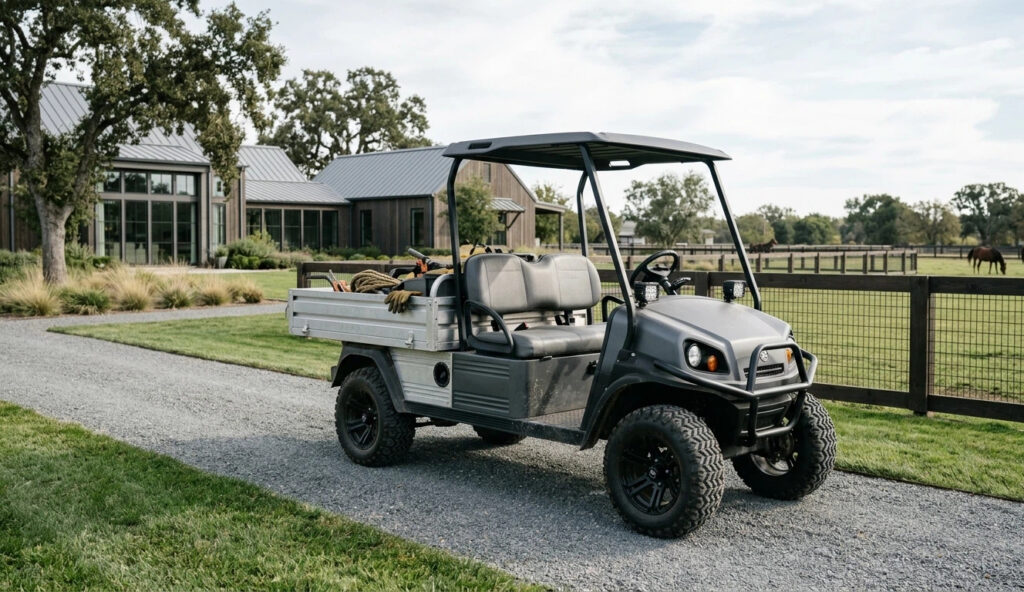
Telematics and fleet tracking are leading that shift. Modern electric fleets can now feed real-time data on battery health, vehicle location, usage cycles, and route efficiency directly into centralized dashboards. This visibility helps operations managers reduce downtime, optimize charging schedules, and extend equipment lifespan — all without adding administrative overhead. According to eMobility trends for 2025, smarter energy management and connected vehicle platforms are among the most significant growth drivers in commercial electric mobility this year.
Quiet operation is another underappreciated advantage. In 24/7 resort environments, hospitals, or urban distribution centers, noise pollution creates real friction — for guests, staff, and neighbors alike. Electric drivetrains eliminate that problem entirely, enabling round-the-clock operations without complaints.
Scaling is equally straightforward. A practical path looks like this:
- Start small: Deploy electric pallet trucks or a versatile short-range cart for targeted use cases
- Expand incrementally: Add passenger transport, tow tractors, or multi-purpose utility vehicles as ROI is confirmed
- Automate strategically: Introduce guided or semi-autonomous units as facility infrastructure matures
As Varyon Machinery puts it, the goal is being “engineered for your operational excellence” — not just today’s demands, but tomorrow’s possibilities.
Still have questions about specific performance specs, maintenance requirements, or environment suitability? The next section addresses the most common queries operations teams ask before committing to electrification.
Frequently Asked Questions About Electric Utility Fleets
Transitioning to eco-friendly fleet management raises practical questions. Here are honest answers to the most common ones.
What is the average range of a 12-seater electric cart?
Most 12-passenger electric carts deliver between 40 and 60 miles per charge under typical load conditions, though terrain, payload weight, and battery chemistry all affect real-world performance. Lithium-ion models generally outperform lead-acid equivalents in both range and consistency. You can explore battery and range options to find the right configuration for your facility size.
How do electric forklifts perform in outdoor vs. indoor environments?
Electric forklifts excel indoors — zero emissions and low noise make them ideal for enclosed warehouses. Outdoors, performance depends on terrain and weather; pneumatic tires and higher IP ratings improve durability in those conditions. In practice, many facilities deploy electric models successfully across both environments with the right spec selection.
What are the maintenance requirements for lithium-ion material handling equipment?
Lithium-ion equipment requires significantly less routine maintenance than combustion or lead-acid alternatives — no fluid top-offs, no cell equalization charges, and fewer moving parts to service. Annual battery health checks and firmware updates are typically sufficient. The right battery choice can cut your total maintenance burden by a measurable margin over a five-year ownership cycle — a point worth factoring into your long-term ownership budget from day one.
Key Takeaways
- Longer cycle life — lithium-ion batteries typically last 2–3x longer before replacement
- Faster charge times — opportunity charging between shifts reduces downtime
- No maintenance watering — unlike lead-acid, lithium cells require minimal upkeep
- Consistent power output — no performance drop as charge depletes
- Manufacturing expertise: Years in production, in-house R&D, and quality certifications (ISO, CE)