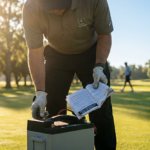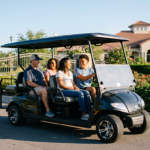
Motorized push carts are quietly reshaping how golfers experience 18 holes — not just as a convenience upgrade, but as a genuine performance tool that protects the body from the first tee to the final putt.
Carrying a bag is costing you strokes. A standard golf bag loaded with clubs, balls, and accessories can weigh between 25 and 35 pounds. Over five miles of walking, that cumulative load compresses the spine, tightens the shoulders, and fatigues the stabilizer muscles that drive a consistent swing. What starts as a minor ache by hole seven becomes a compensated, shortened backswing by hole fifteen.
As the Golf Digest has noted, “Walking is the way the game was meant to be played, but the physical toll of carrying a bag can negatively impact a player’s performance on the back nine.” That tension — between the tradition of walking and the physical reality of carrying — is precisely what a motorized push cart resolves.
The calorie numbers tell a compelling story. Research from Neil Wolkodoff, PhD found that walking with a motorized push cart can help a golfer burn up to 1,400 calories per 18-hole round. Riding in a cart drops that figure significantly, and carrying a bag introduces physical stress that actually degrades performance before the calorie math even matters.
Back-nine consistency is where rounds are won or lost. A golfer who reaches holes 13 through 18 with fresh legs, a loose upper body, and stable core muscles is a fundamentally different competitor than one who’s been hauling gear since the first hole. Motorized assistance eliminates grip fatigue and postural compensation without removing the cardiovascular benefit of walking.
The psychological shift is equally significant. Moving freely down the fairway — hands unencumbered, stride natural — creates a focused, low-stress mental state that riding in a premium golf cart simply can’t replicate. That hands-free clarity sets up sharper pre-shot routines and calmer decision-making under pressure.
This performance case only gets stronger when you consider what powers these carts — and why the technology driving them is evolving faster than ever.
Engineering Longevity: Why Lithium Power is Non-Negotiable
The power source inside a motorized push cart determines everything — round consistency, terrain capability, and the total cost of ownership for any golf course cart operation.
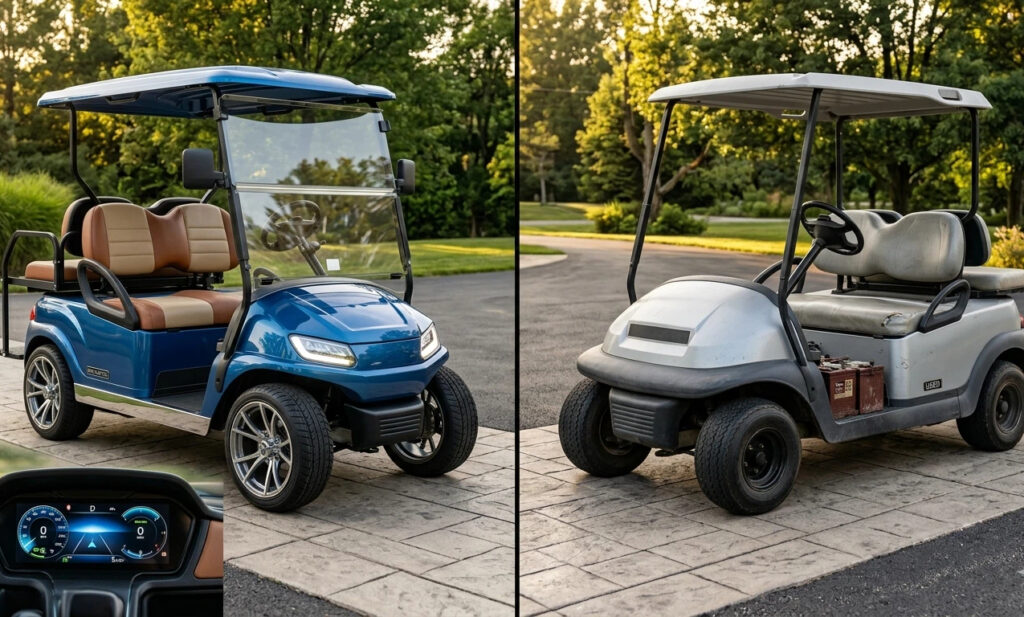
Lead-acid batteries are simply no longer fit for purpose. Custom lithium units offer significantly higher energy density and faster charging cycles than their lead-acid counterparts, which translates directly into fewer mid-round failures and tighter fleet turnaround windows. For fleet managers, long battery life on the golf course isn’t a bonus feature — it’s the primary KPI that drives purchasing decisions.
What makes lithium the non-negotiable choice comes down to a specific set of performance advantages:
- Consistent output: Lithium cells maintain a flat discharge curve, delivering full power whether the battery is at 100% or nearly depleted — critical on the back nine.
- Rapid recharge cycles: Faster turnaround between rounds supports high-traffic course scheduling without dead inventory sitting in charging bays.
- Lighter overall weight: Reduced mass lowers the pressure a cart exerts on the ground per square inch, directly protecting fairway turf from compaction damage.
- Extended lifespan: Lithium cells typically outlast lead-acid alternatives by a wide margin, improving long-term ROI — a point detailed in this breakdown of fleet efficiency gains.
- Reliable incline performance: Steep terrain and varied gradients don’t trigger the voltage sag common in older battery chemistries.
Bold callout: A lighter, lithium-powered cart isn’t just easier on the golfer — it’s measurably easier on the course itself.
Turf compaction is a legitimate concern for course superintendents. Heavier traditional carts concentrate load unevenly across the fairway, stressing root systems over time. The shift to lighter lithium-powered motorized carts meaningfully reduces that footprint — a win for the golfer and the groundskeeping team alike.
Understanding battery performance is only one dimension of the physical equation, however. How the cart distributes that weight while in motion — and what that means for the golfer’s own body mechanics — opens up an equally important conversation about ergonomics.
The Ergonomics of Performance: Protecting the Golfer’s Kinetic Chain
Motorized golf push cart technology doesn’t just carry your bag — it actively protects the biomechanical systems that make a consistent swing possible.
Asymmetrical loading is one of golf’s most underappreciated injury risks. Manually pulling a two-wheeled trolley creates repetitive rotational stress on the lumbar spine, especially on sloped terrain. Over 18 holes, that cumulative strain adds up in ways that compound round after round, season after season. The lower back doesn’t fail all at once — it degrades gradually, and most golfers don’t notice until performance drops.
Shoulder health follows a similar pattern. Research from the Titleist Performance Institute confirms that remote-controlled and motorized golf carts significantly reduce spinal loading and shoulder strain compared to carrying a bag. When a motorized cart follows the golfer autonomously or via remote, both arms remain relaxed and symmetrically positioned — a stark contrast to the forward-lean pulling posture that chronically overloads the rotator cuff.
“Reducing repetitive mechanical stress on the shoulder and spine allows golfers to preserve the neuromuscular readiness that a quality swing demands.” — Titleist Performance Institute
Swing energy preservation is where the ergonomic argument becomes a performance argument. In practice, fatigue in the posterior chain — lower back, glutes, and shoulder girdle — directly degrades club speed and tempo. A golfer who arrives at the 18th tee without accumulated postural fatigue swings more freely, more consistently. The motorized cart essentially functions as an energy-conservation system, not just a convenience.
This benefit is especially relevant for golfers over 50, a demographic that represents a growing share of the sport’s active population. Reduced physical loading means longer competitive years and fewer season-interrupting injuries. Understanding how consistent power delivery supports that experience adds another layer to this picture.
What makes these ergonomic advantages fully reliable, though, comes down to how a cart is built — and that conversation starts with materials and manufacturing standards.
Redefining the Premium Golf Cart Experience
A truly premium golf cart solution isn’t defined by a glossy finish — it’s built into the engineering tolerances, material choices, and manufacturing philosophy from the ground up.
Premium motorized carts are engineered to a measurable standard, not just a price point. The ‘D-type’ classification has emerged as a benchmark in motorized push cart manufacturing, distinguishing carts built for professional-grade performance from basic consumer models. D-type standards typically govern structural rigidity, motor integration, and braking precision — the factors that separate a cart that performs on hole 18 as reliably as it did on hole 1.
Material selection is where the gap between premium and standard widens most visibly. Aircraft-grade aluminum alloy frames deliver a superior strength-to-weight ratio compared to injection-molded plastics, resisting flex under load while keeping the overall cart light enough for easy maneuvering. On the other hand, lower-cost plastic-chassis alternatives often show micro-stress fractures over time, particularly on courses with elevation changes and repeated vibration. For golfers exploring the full spectrum of cart performance upgrades, material integrity is consistently one of the top differentiators.
Stability engineering matters just as much as raw material quality. Hilly or uneven fairways expose weaknesses in poorly designed wheel geometry and low-set centers of gravity. Premium motorized push carts counter this with wider wheelbases, precision-balanced axle positioning, and automatic hill-hold braking — preventing runaway roll on steep terrain without requiring the golfer to manually intervene.
Manufacturer credibility is the final pillar of a genuinely premium product. Shandong Varyon Machinery Co., Ltd. has built a recognized position in the international electric vehicle and material handling market, now applying that industrial-grade engineering discipline directly to golf cart development for export markets worldwide. That crossover expertise — from heavy-duty machinery to precision recreational equipment — reflects in build consistency that entry-level manufacturers simply can’t replicate.
These engineering principles don’t just benefit individual golfers. Course operators are beginning to recognize how premium carts translate into operational advantages — a conversation worth exploring next.
Operational Excellence: The Business Case for Course Managers
Motorized push carts represent a genuine revenue and efficiency opportunity for golf course managers — one that’s easy to overlook when ride-on fleets already feel familiar.
Pace of play is the metric that matters most. Motorized push carts move golfers at a consistent walking pace without the congestion that full-sized ride-on carts create at cart paths, bridges, and staging areas. A tighter, more predictable round time means more tee times per day — without expanding infrastructure.
The maintenance economics are equally compelling. Consider the operational contrast:
| Factor | Ride-On 4-Seater Fleet | Motorized Push Carts |
|---|---|---|
| Unit cost (avg.) | $8,000–$12,000+ | $600–$1,500 |
| Maintenance complexity | High (steering, brakes, chassis) | Low (motor, battery, wheels) |
| Storage footprint | Large dedicated lot | Compact rack storage |
| Battery longevity | Frequent deep cycling | Long battery life for golf courses with LiFePO4 cells |
| Replacement cycle | 5–7 years | 8–12 years |
Courses investing in lithium-powered push cart solutions gain a particular advantage: flat discharge curves mean consistent performance across an entire 18-hole round, round after round.
Demographic alignment is the strategic upside. The wellness-focused golfer — one who tracks steps, monitors heart rate, and walks intentionally — is the fastest-growing segment of the golf market. According to Grand View Research, the global motorized push cart market is projected to grow at a CAGR of 4.5% through 2030. Courses that offer premium motorized push cart rentals position themselves directly in front of this expanding audience.
Premium rental tiers unlock new revenue streams without significant capital outlay. A tiered model — standard pull carts, mid-range motorized units, and top-spec models with GPS and remote follow mode — gives golfers choices while increasing average spend per round.
The operational case is clear. And as the next section shows, what truly converts a skeptic is seeing these carts perform in real conditions.
Visualizing the Future: Motorized Carts in Action
Seeing a motorized push cart navigate a real course tells you more in 30 seconds than any spec sheet ever could — and that’s exactly why video content has become the most powerful proof point in this market.
The controls speak for themselves. What typically strikes first-time users most is how little there is to learn. Speed dials, directional toggles, and auto-follow sensors are engineered for instinctive use — not for tech enthusiasts, but for anyone who wants to focus on their game rather than their equipment. Every reputable electric golf cart manufacturer now treats intuitive operation as a baseline requirement, not a premium feature.
Terrain adaptability is where these machines genuinely earn their reputation. Varyon’s motorized solutions are specifically optimized for daily use across diverse course terrains — from firm fairways to soft, undulating rough. In practice, a well-engineered cart holds its line on side slopes, resists bogging down in damp conditions, and delivers a consistently smooth ride across changing surfaces that manual pushing simply cannot replicate over 18 holes.
Social media is amplifying this shift rapidly. Search terms like “walking board golf” and “motorized assist cart” have surged across platforms, with golfers sharing on-course footage that documents both the physical relief and the pure enjoyment of the walking-assist lifestyle. According to research into golfer behavior, users consistently report that motorized assist transforms a fatiguing round into something genuinely recreational — reducing leg fatigue without sacrificing the health benefits of walking. Comments sections and community forums echo a common sentiment: “I wouldn’t go back to pushing or riding.”
That enthusiasm for personalization — the cart as an extension of individual style and preference — naturally raises the next question: how far can customization actually go?
Customization and the New Standard of Golf Luxury
Personalization has become the defining frontier of the premium motorized push cart market — and custom lithium golf carts are leading that charge with smarter tech, bolder aesthetics, and modular engineering.
Integrated GPS mounting, USB charging ports, and dedicated device trays are now table stakes on upper-tier models. Golfers expect their cart to function as a mobile command center — not just a bag carrier. Rangefinders, smartphones, and course-mapping devices slot into dedicated mounts, keeping everything accessible without interrupting pace of play.
Color and finish trends have shifted dramatically. Modern premium carts now feature soft-matte finishes, brushed accents, and custom lithium power banks that can be color-matched or personalized for performance tiers. Gone are the utilitarian black frames of early electric trolleys. Today’s market reflects what the electric trolley revolution has proven: golfers treat their equipment as an extension of personal style, not just function.
Modular design is where engineering meets real-world practicality. A cart that can be field-repaired — swappable battery packs, bolt-on wheel assemblies, interchangeable controller modules — dramatically lowers the total cost of ownership over time. This matters whether you’re an individual buyer protecting a $1,500+ investment or a course manager overseeing a fleet. Understanding how design affects long-term value helps buyers make smarter purchasing decisions from day one.
Modular architecture isn’t a luxury feature — it’s a long-term financial strategy.
The “D-type” chassis architecture represents the current pinnacle of motorized push cart design. Its lower center of gravity, wider wheelbase, and optimized battery housing create a stability profile that performs across varied terrain — steep fairways, soft turf, and tight cart paths alike. It’s the structural reason premium carts handle so differently from budget alternatives, and it’s what separates serious engineering from cosmetic upgrades.
As the market matures, these design standards are converging into what buyers should expect as baseline — a shift that sets the stage for understanding what separates truly great carts from the rest.
The Bottom Line: What You Need to Know
Motorized push carts represent the single most practical upgrade a walking golfer can make — combining genuine fitness benefits with the convenience modern players demand.
The core argument is straightforward. As covered throughout this article, walking 18 holes delivers measurable cardiovascular and caloric advantages over riding. A motorized push cart preserves every one of those benefits while eliminating the fatigue that causes most golfers to abandon walking altogether. The result is a healthier game that’s also more enjoyable — and that’s a rare combination in any sport.
Here are the four essential takeaways every golfer should carry forward:
- Fitness and convenience aren’t opposites. Motorized push carts bridge that gap cleanly. You still walk, you still burn calories, and you still engage with the course — the motor simply handles the physical strain of hauling a loaded bag across uneven terrain.
- Lithium battery technology is non-negotiable for long-term value. Lead-acid alternatives may look affordable upfront, but battery and pricing comparisons consistently show that lithium delivers superior cycle life, lower maintenance costs, and better performance per dollar over time.
- Walking with assistance protects the body. In practice, golfers who use motorized carts report less joint fatigue and fewer repetitive-strain issues — making it a smart investment for players who want to stay on the course well into their later years. According to research compiled for golfers, the right equipment choice directly impacts how long and how comfortably you can play.
- Manufacturer quality defines the experience. The VY-D4 from Shandong Varyon represents the intersection of motorized efficiency and traditional walking golf — a benchmark that reflects where global quality standards are heading.
Bold takeaway: The walking revolution isn’t a trend — it’s a permanent shift toward smarter, healthier golf, and the right motorized push cart is your entry point.
Still have questions? The next section tackles the most common ones golfers ask before making the switch.
Frequently Asked Questions About Motorized Golf Solutions
Motorized push carts answer real golfer concerns — from battery endurance to hill performance — and the answers consistently favor making the switch.
How long does a lithium battery last on a single charge? Modern lithium-powered motorized push carts are engineered to handle 18+ holes easily on a single charge, according to Varyon Machinery Technical Support. In practice, most premium lithium units deliver enough reserve power for a second round — a meaningful advantage over older lead-acid systems that could fade on the back nine.
Can motorized push carts handle steep hills? Yes. Torque control and multi-wheel drive configurations allow quality motorized push carts to manage significant elevation changes without slowing or straining. Courses with aggressive terrain — think mountain layouts or links-style undulations — are no longer a barrier. Models built with extended-range dual-battery systems and grass-optimized tires are specifically designed for those demanding conditions.
What is the maintenance schedule for a premium electric cart? Compared to gas-powered alternatives, electric motorized push carts require minimal upkeep. A practical routine includes:
- Monthly: Check tire pressure and wipe down motor housing
- Quarterly: Inspect battery terminals and charging connections
- Annually: Full system diagnostic and brake check
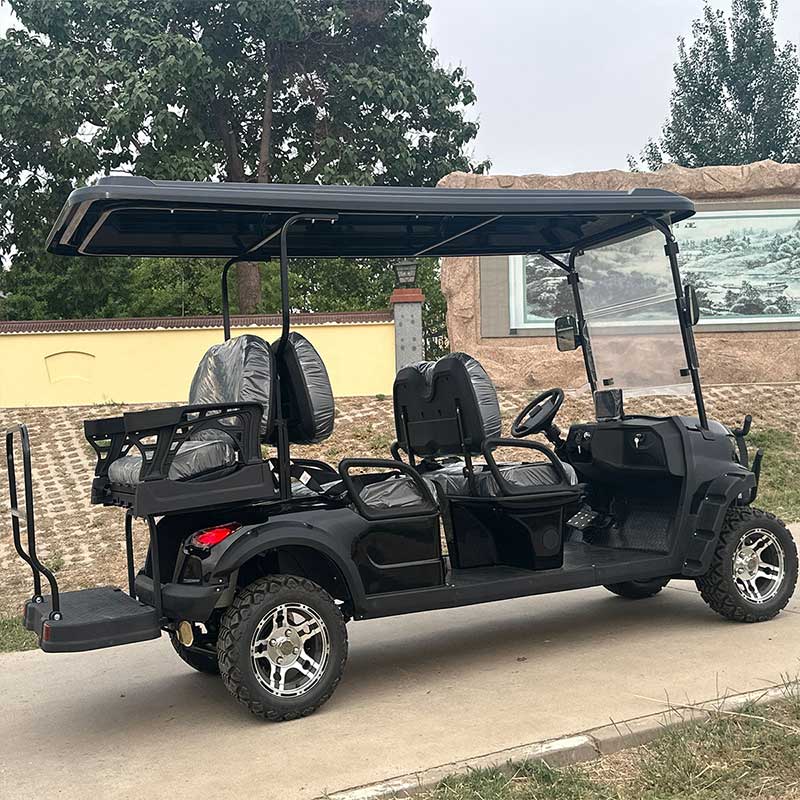
Electric push cart ownership is largely low-effort — no oil changes, no fuel lines, no carburetor issues.
How does a motorized push cart improve my golf game? The performance benefits are well-documented. Walking 18 holes burns significantly more calories than riding, and motorized push carts let golfers capture that fitness advantage without physical fatigue interfering with swing mechanics. Less physical strain in the final holes means better decision-making and more consistent ball-striking when it counts most.
The trend towards walking isn’t slowing down — and a motorized push cart is the smartest first step into it.