Fleet acceptance should be documented before the first working shift
An electric golf cart pre-delivery inspection protects the buyer at the moment when transport damage, specification errors, missing accessories, and setup problems are easiest to identify. The process should begin before packaging is removed and should finish only after documents, charging, controls, safety equipment, and a loaded road test have been checked. Buyers comparing Electric Golf Cart Products should use one numbered checklist for every unit.
The inspection is not a substitute for the supplier manual, professional service, or legal compliance review. It is a disciplined acceptance process that records what arrived and whether it matches the order. The NHTSA low-speed vehicle guidance provides background on low-speed vehicles, while 49 CFR 571.500 describes federal requirements for vehicles classified under FMVSS 500 in the United States. Applicable classification and local rules must be confirmed for the intended use.

Prepare the purchase order and inspection sheet first
Before the vehicle arrives, assemble the signed specification, model and quantity list, battery and charger details, color, seating, tires, roof, windshield, mirrors, lights, accessories, spare parts, manuals, warranty terms, and packing list. A B Type Electric Golf Cart order may contain several seating configurations, so each chassis or serial number should be matched to the correct line item rather than inspected as an anonymous cart.
Assign one person to lead the inspection and another to record photos and results. Define acceptable, conditional, and rejected outcomes before unloading begins. The ANSI standards overview explains the role of standards and conformity, and UL Standards and Engagement provides information about product safety certification. Buyers should verify any claimed listing or certification against the exact component and documentation supplied, not assume that a logo applies to the whole vehicle.
| Accept | The unit matches the order, passes inspection, and has complete documentation. |
| Conditional | A minor issue is documented with an agreed correction, owner, and due date. |
| Hold | The unit is not released to service until a safety, specification, or damage concern is resolved. |
| Reject | The unit has a major nonconformity or damage that cannot be accepted under the order. |
Inspect packaging and transport condition before unloading
Photograph the container, crate, tie-down points, moisture indicators if used, and any crushed, shifted, punctured, or stained area before material is moved. Confirm the number of packages and compare labels with shipping documents. Damage evidence is strongest when it shows the condition at receipt, so do not wait until the cart has been cleaned or driven away from the unloading location.
Plan unloading with suitable equipment, trained personnel, and a controlled exclusion zone. The OSHA personal protective equipment guidance provides general guidance on workplace protective equipment, while the OSHA electrical safety guidance covers electrical hazards. The employer should assess unloading tasks and select appropriate controls. Do not use the cart as a towing point, lifting point, or powered unloading aid unless the manufacturer specifically authorizes that method.
Match identity, configuration, and supplied documents
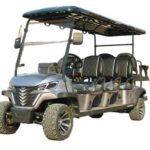
Record the model, serial or chassis number, battery identification, charger model, key count, and any regulatory label. Compare seating, body color, tire type, roof, windshield, mirrors, lighting, restraints if ordered, and accessory list with the purchase order. A model such as the Carrinho de golfe VY-B4 para quatro pessoas should be checked against the exact ordered configuration because a correct model name does not prove that every option and market requirement is present.
Check that manuals, wiring information, maintenance schedules, charger instructions, warranty documents, parts lists, and packing records are readable and correspond to the delivered unit. The CPSC golf cart and LSV safety guide offers golf cart and low-speed vehicle safety information, and low-speed vehicle background provides category background. Use those sources for orientation, then rely on official documents and local authorities for the vehicle’s intended classification and operating permissions.
Examine the body, frame, seats, roof, and glass
Inspect panels under strong, even lighting. Look for cracks, dents, coating damage, corrosion, loose fasteners, uneven gaps, damaged trim, and signs that a tie-down contacted the body. Check the frame and visible suspension mounting areas for deformation or fresh tool marks. Photograph every concern with a wide view and a close view, and place the unit on hold when structural damage is suspected.
Confirm seats are secure, hinges and latches work, handholds are tight, the roof is aligned, and the windshield or glazing is undamaged and correctly mounted. The NHTSA low-speed vehicle guidance has published interpretations concerning low-speed vehicle glazing and related requirements. Buyers should verify the rules that apply to their market and configuration instead of assuming that any transparent panel is suitable for public-road operation.
Check tires, wheels, steering, suspension, and brakes
Verify tire size and type against the order, inspect for cuts and transport damage, set pressure to the manufacturer’s specification, and confirm wheel fasteners have been checked using the required procedure. With the vehicle secured, inspect visible steering and suspension components for loose hardware, contact marks, leakage, or misalignment. Do not release a cart with an unexplained steering pull or uneven ride height.
Test service and parking brakes at low speed in a controlled area before any loaded road test. Pedal feel should be predictable, the cart should stop without severe pull, and the parking control should hold on the approved test condition. The CDC motor vehicle safety resources provides motor-vehicle safety resources that reinforce the value of controlled procedures and driver preparation. Any brake concern requires qualified inspection, not repeated high-speed testing.
Inspect the battery system and charger as one package
Confirm battery type, voltage, capacity labeling, mounting, connector condition, cable routing, protective covers, and visible signs of impact or moisture. Check that the supplied charger matches the battery system and destination power requirements. The vehicle should not be charged through a convenient outlet until compatibility, grounding, circuit protection, and the manufacturer’s setup instructions have been confirmed.
The OSHA battery charging guidance outlines battery-charging hazards, and the NFPA electric vehicle safety resources provides electric-vehicle safety resources. These materials support a disciplined charging-area plan, but the delivered equipment and manuals control the specific procedure. A D Type Electric Golf Cart fleet with lithium options should arrive with clear instructions for storage state, first charge, fault indicators, temperature limits, and emergency isolation.
Test every control, light, warning, and accessory
With the cart in a safe stationary condition, verify key or start control, direction selector, accelerator interlock, brake switch behavior, state-of-charge display, horn, lights, turn signals if fitted, hazard lights, mirrors, wiper, USB outlets, display functions, reverse warning, and any ordered accessories. Record each result rather than marking one broad box labeled electrical.
Operate accessories long enough to detect loose connections, flicker, unusual heat, or incorrect switching. Confirm added equipment does not obstruct steering, pedals, driver sight lines, passenger space, labels, or service access. The U.S. DOE charging basics provides charging basics, and the Alternative Fuels Data Center electric-vehicle overview covers vehicle and infrastructure planning. Those general resources help buyers remember that the cart and its charging environment must work together.
Run an unloaded and loaded road test
Begin with an unloaded low-speed test in a closed, level area. Check start-up, forward and reverse engagement, acceleration, straight tracking, turning in both directions, braking, parking control, noise, vibration, and warning indicators. Then repeat the relevant route with the approved test load. A four-passenger model such as the VY-D4 Motorized Golf Cart should be evaluated with realistic weight distribution rather than judged only while empty.
Include the steepest approved grade, tightest turn, typical surface transition, and a normal charging return if those conditions can be tested safely. Do not exceed the vehicle instructions or use public roads merely to complete acceptance. The ADA mobility device guidance provides mobility-device guidance that can inform accessible service planning, but passenger-assistance procedures and vehicle suitability must be assessed for the site’s actual users and routes.
Create a punch list that can actually be closed
Every issue should have a unit number, location, description, photo, severity, responsible party, correction method, and due date. Avoid vague notes such as check later. A missing cosmetic cap and an intermittent brake warning should never appear equivalent. Safety-related concerns keep the unit out of service until corrected and retested, while minor appearance items can be handled under the agreed acceptance terms.
Share the punch list through the documented commercial channel and keep the original evidence. The Contact Varyon page can support supplier communication, while About Varyon provides company background for procurement records. Agree on whether parts, remote guidance, local service, replacement, or another remedy will close each item. The person who verifies closure should sign and date the result instead of relying on an informal message.
Complete handover, training, and the first service baseline
Final handover should cover safe operation, charging, parking, cleaning, daily inspection, storage, emergency isolation, approved accessories, towing or transport restrictions, and maintenance intervals. Record who attended and which manuals were provided. Keys, chargers, spare parts, tools, and documents should be counted again so that a complete vehicle is not accepted while essential support items remain missing.
Set a baseline for tire pressure, battery status, fault codes if accessible, wheel-fastener checks, brake feel, and route performance. Schedule an early follow-up after the first operating period to catch settling fasteners, accessory issues, or training gaps. A clean baseline makes later warranty discussions more precise and helps the fleet distinguish a delivery condition from damage or wear that occurred after service began.
Verify spare parts, tools, software access, and after-sales contacts
Fleet readiness depends on more than the carts themselves. Compare the delivered spare parts and special tools with the order, identify each item, and confirm storage requirements. Check whether diagnostic access, mobile applications, passwords, cables, adapters, or firmware instructions are required for authorized maintenance. Do not assume a local workshop can support the vehicle merely because it has general electrical experience; the supplier should define training, service boundaries, and escalation paths.
Create an after-sales contact sheet with the correct unit identifiers, warranty process, working hours, required photos or fault information, and the method for ordering replacement parts. Test the communication route with a non-urgent question during handover. This confirms that procurement, operations, and maintenance know where to send a future issue and prevents a disabled cart from sitting while staff search old messages for the right person.

Video reference
The video below shows a Varyon D type cart in operation. Use it as a visual reference for body condition, controls, steering behavior, and passenger layout, then complete the documented stationary and road-test checks for each delivered unit.
Questions buyers often ask
Should a cart be driven before the battery and charger are checked?
Only follow the supplier’s documented receiving and setup process. Confirm the battery is secured, connections appear intact, state of charge is appropriate, and there are no warning signs before powered movement. Charging compatibility and electrical safety should be verified before the first charge.
Can several identical carts share one inspection result?
No. Sample checks may support process auditing, but each delivered unit needs its own identity, condition record, control check, and acceptance status. Transport damage, loose hardware, accessory errors, and setup issues can affect one cart even when the rest of the shipment is correct.
What should be included when requesting a fleet quotation?
Specify model and seating, route, load, terrain, battery and charger needs, destination power, accessories, market requirements, documents, spare parts, inspection criteria, training, and acceptance terms. Sending that brief through Request a Quote reduces ambiguity before production and makes delivery inspection much faster.
Acceptance is complete only when evidence and operation agree
A good pre-delivery inspection does not search for reasons to reject a shipment. It creates a fair record that protects both buyer and supplier, separates minor corrections from safety concerns, and confirms that the delivered configuration can begin work as ordered.
When every unit is identified, photographed, checked, road-tested, documented, and signed off, the fleet starts with a trustworthy baseline. That discipline improves training, maintenance, warranty communication, and daily reliability long after the delivery packaging has disappeared. Keep the signed acceptance record with the permanent vehicle file so future inspections can compare condition and configuration against the day the cart entered service.