Table of Contents
Golf carts are no longer used only on golf courses. Across residential communities, resorts, and coastal towns in California, they are becoming a convenient transportation option for short trips. However, many buyers and drivers ask the same question: are golf carts street legal in California? Understanding the legal framework is essential before operating one on public roads.
The rules governing golf carts street legal California situations come from several sources, including the California Vehicle Code (CVC) and regulations concerning low-speed vehicles (LSVs). These laws determine where golf carts may operate, what equipment is required, and whether registration or insurance is necessary.
This guide explains the key legal requirements and the practical steps drivers should understand before using a golf cart on public roads.
Understanding the Legal Definition of a Golf Cart in California
Before discussing whether golf carts street legal California situations are allowed, it is important to understand how the law defines a golf cart.
Under California Vehicle Code Section 345, a golf cart is defined as a motor vehicle designed to carry golf equipment and not more than two persons, with a maximum speed of 15 mph.
Official source:
https://leginfo.legislature.ca.gov/faces/codes_displaySection.xhtml?sectionNum=345.&lawCode=VEH
Because golf carts are limited in speed and design, the law treats them differently from standard passenger vehicles. They are generally intended for golf courses or private communities. However, certain public road uses are permitted under specific conditions.
The distinction between traditional golf carts and low-speed vehicles is central to determining when golf carts street legal California rules apply.
Where Golf Carts Can Legally Operate
California law allows golf carts to operate on certain public roads, but with restrictions.
According to California Vehicle Code Section 21115, local governments may authorize golf cart use on streets where the speed limit is 25 mph or less, especially in designated golf cart zones.
Official source:
https://leginfo.legislature.ca.gov/faces/codes_displaySection.xhtml?sectionNum=21115.&lawCode=VEH
These zones are typically found in:
- Residential communities near golf courses
- Resort areas
- Retirement communities
- Planned developments
When municipalities approve such zones, golf carts street legal California rules allow them to travel short distances between residential areas and golf facilities.
However, outside these designated areas, standard golf carts are generally not permitted to operate freely on public streets.

Golf Cart vs Low-Speed Vehicle (LSV)
Many drivers assume that all golf carts can become street legal with simple modifications. In reality, the law distinguishes between traditional golf carts and Low-Speed Vehicles (LSVs).
Under federal and California regulations, an LSV is a vehicle capable of speeds between 20 mph and 25 mph. These vehicles must meet safety standards set by the National Highway Traffic Safety Administration (NHTSA) under Federal Motor Vehicle Safety Standard 500.
Official source:
https://www.nhtsa.gov/document/low-speed-vehicles
Because LSVs are designed for road use, they must include specific safety features. When discussing golf carts street legal California situations outside golf cart zones, vehicles usually need to qualify as LSVs.
Equipment Requirements for Street-Legal Operation
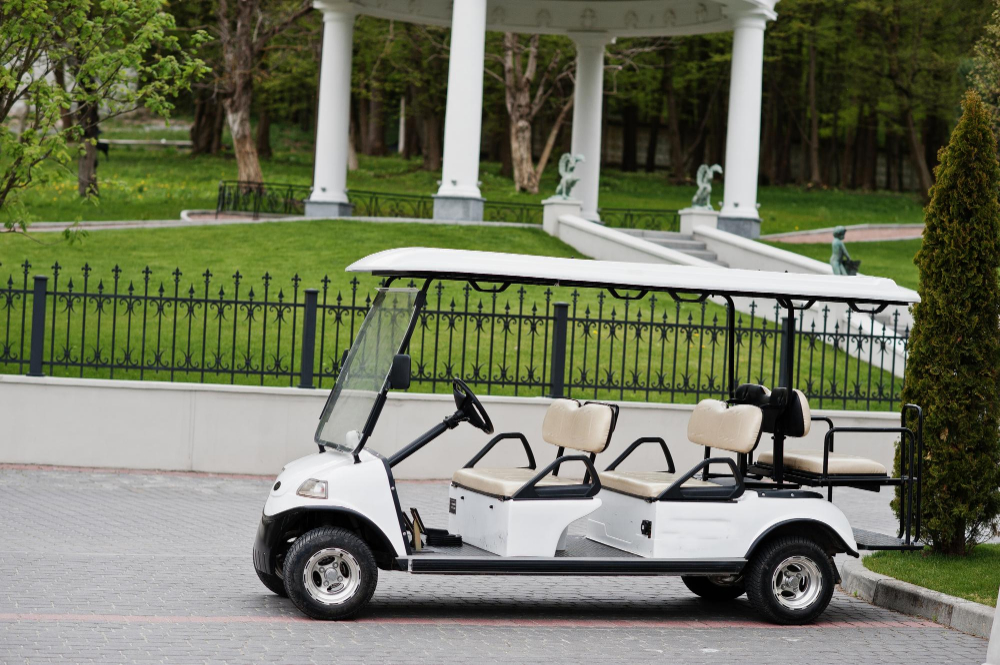
For a vehicle to operate legally on public roads under LSV classification, several safety components are required.
The California Department of Motor Vehicles (DMV) lists the following mandatory equipment:
- Headlights
- Tail lights
- Brake lights
- Turn signals
- Rearview mirrors
- Windshield
- Seat belts
- Reflectors
- Vehicle Identification Number (VIN)
Official source:
https://www.dmv.ca.gov/portal/vehicle-registration/new-registration/register-a-low-speed-vehicle/
These safety features are necessary because golf carts street legal California rules prioritize visibility and passenger protection when vehicles share roads with standard traffic.
Without these components, a golf cart typically cannot qualify for public road operation outside authorized golf cart zones.
Registration and Insurance Requirements
Unlike traditional golf carts used exclusively on courses, LSVs must be registered with the California DMV.
Registration requirements include:
- A valid VIN
- DMV registration
- License plates
- Insurance coverage
These requirements ensure that golf carts street legal California vehicles can be identified and insured similarly to other motor vehicles.
Drivers must also possess a valid driver’s license when operating an LSV on public roads.
Age and Licensing Requirements
Another common question concerns who is allowed to drive these vehicles.
California law requires operators of LSVs to hold a valid driver’s license. This requirement ensures that drivers understand traffic laws and safety responsibilities.
When discussing golf carts street legal California regulations, the licensing requirement mainly applies to vehicles operating on public streets rather than those used strictly within golf courses or private property.
Local Regulations and Community Rules
Even though state law provides the legal framework, local governments often create additional rules governing golf cart use.
Cities and counties may establish:
- Golf cart zones
- Special crossings
- Restricted road segments
- Community permits
As a result, golf carts street legal California conditions may vary depending on the municipality. Residents should always check with local authorities before driving a golf cart on public streets.
The California DMV recommends contacting local city or county transportation offices to confirm local rules.
Official DMV information:
https://www.dmv.ca.gov/portal/
Practical Considerations for Buyers
For buyers considering a golf cart for transportation rather than recreation, understanding these legal distinctions is important.
Vehicles marketed as street-legal golf carts are usually manufactured or upgraded to meet LSV standards. This means they include required lighting systems, safety equipment, and VIN identification necessary for registration.
Buyers interested in golf carts street legal California use should verify:
- Whether the vehicle qualifies as an LSV
- If it includes required safety equipment
- Whether it can be registered with the DMV
- Whether local roads permit LSV operation
These checks can prevent legal issues and ensure the vehicle can be used as intended.
Conclusion
Golf carts can offer a practical and efficient way to travel short distances, especially in resort communities, campuses, and residential neighborhoods. However, determining whether golf carts street legal California situations apply depends on several factors, including vehicle classification, safety equipment, and local regulations.
Standard golf carts are typically limited to golf courses or designated golf cart zones. Vehicles intended for broader road use must usually qualify as low-speed vehicles, meet federal safety standards, and be properly registered.
Understanding these rules allows drivers and buyers to use golf carts responsibly while remaining compliant with California law.
FAQ
Are golf carts street legal in California?
In most cases, standard golf carts are not allowed to operate on regular public roads. However, golf carts street legal California rules allow them to be driven in designated golf cart zones or on roads with speed limits of 25 mph or less if local authorities permit it.
Do golf carts need to be registered in California?
Traditional golf carts used on golf courses usually do not require registration. However, vehicles classified as low-speed vehicles (LSVs) under golf carts street legal California regulations must be registered with the California DMV and display license plates.
What equipment is required to make a golf cart street legal in California?
To meet golf carts street legal California requirements as an LSV, vehicles typically need headlights, brake lights, turn signals, mirrors, seat belts, a windshield, reflectors, and a VIN number for registration.
Can golf carts drive on roads with higher speed limits?
Generally, golf carts street legal California laws restrict them to roads with speed limits of 25 mph or less. Low-speed vehicles may be allowed to cross roads with higher speed limits, but continuous travel on those roads is usually not permitted.
How fast can a street legal golf cart go in California?
Under golf carts street legal California regulations, traditional golf carts are generally limited to a maximum speed of 15 mph according to the California Vehicle Code. Vehicles that can travel between 20 mph and 25 mph are typically classified as low-speed vehicles (LSVs) and must meet additional safety and registration requirements before operating on public roads.