
American manufacturing is undergoing its most significant transformation in decades — and the companies that adapt fastest are redefining what it means to build for performance. Today’s leading manufacturer isn’t simply assembling parts at scale; they’re engineering precision solutions for demanding, specialized applications across fleets, infrastructure, and industrial operations.
The numbers confirm the momentum: the global specialized manufacturing market is projected to grow at a CAGR of 8.8% through 2032, driven by rising demand for high-utility, purpose-built equipment.
Three forces are reshaping the sector right now:
- Automation and smart integration — Production floors increasingly rely on robotics, AI-driven quality control, and connected systems
- Specialization over mass production — Buyers demand equipment engineered for specific use cases, not one-size-fits-all outputs
- Domestic sourcing as a supply chain strategy — Nearshoring and US-based production reduce lead times and geopolitical risk, a lesson reinforced by recent global disruptions
The Manufacturing USA network’s “Innovation and Collaboration” framework is accelerating this shift, connecting private manufacturers with federal research to fast-track applied technology — from advanced materials to next-generation mobility platforms. Even industries once considered niche, like compact electric utility vehicles, now reflect this broader industrial evolution.
With that foundation in place, the categories that follow reveal which manufacturers are leading this charge — starting with the chemical and engineered plastics companies powering modern machinery.
1. Heavy Chemical and Engineered Plastics Leaders
Every serious industrial manufacturer operating in 2026 depends on one foundational tier that rarely gets credit: heavy chemical and engineered plastics production. These companies supply the raw compounds and polymer materials that make modern machinery, vehicles, and electronic systems physically possible.
As former Celanese CEO David Weidman put it plainly:
“You cannot get into a car or go anyplace or do anything that doesn’t involve our chemicals.”
That’s not hyperbole — it’s supply chain reality. Consider how deeply engineered plastics penetrate modern industrial output:
- Recognize the scope: Polymer compounds appear in everything from fuel system components to electric drivetrain housings — even the shift toward cleaner propulsion, as seen in battery-powered vehicle adoption, relies heavily on lightweight thermoplastics.
- Understand the B2B dependency: Automotive OEMs, aerospace suppliers, and tech hardware producers all source specialty resins upstream — any supply disruption cascades instantly downstream.
- Prioritize chemical reliability: Downstream manufacturers build production schedules around consistent material specs; variability in purity or tensile ratings creates costly rework.
Chemical consistency is, in many ways, the invisible foundation of every high-performance fleet solution built in America today.

The takeaway: before evaluating any manufacturer’s output quality, trace their material inputs — chemical and polymer reliability is where performance either starts or breaks down.
2. Precision Automation and Assembly Manufacturers
Automated assembly systems have reshaped what modern production lines can reliably achieve. In demanding industrial environments, cap assembly and insertion machines represent a critical upgrade point — eliminating the inconsistency of manual handling and replacing it with repeatable, high-throughput precision. As Vality Automation notes, automated machinery is specifically engineered to withstand demanding industrial processes while ensuring reliability and quality across every production cycle.
Contract manufacturing partners who invest in precision automation deliver measurable advantages across the supply chain. Rather than absorbing costly human error or production bottlenecks, automated insertion systems maintain consistent cycle times even under peak load. The efficiency gains stack up quickly:
- Reduced downtime — automated systems flag errors in real time, cutting unplanned stoppages
- Higher throughput — cap and insertion machines operate at speeds no manual team can match sustainably
- Lower per-unit cost — fewer interventions mean tighter margins and stronger output predictability
On the other hand, automation isn’t a plug-and-play fix. Equipment calibration, operator training, and maintenance schedules all require deliberate planning. Companies that treat automation as a long-term infrastructure investment — rather than a quick cost-cut — consistently outperform those that don’t.
This same principle of purpose-built precision extends beyond assembly lines. As industrial fleets grow more complex, the shift toward electric-powered transport reflects that same demand for efficiency — setting the stage for specialized fleet manufacturers to step in.
Choose automation partners that treat reliability as a non-negotiable, not an afterthought.
3. Specialized Electric Fleet Manufacturers: Varyon Machinery
When evaluating who manufactures high-capacity electric fleet vehicles for resort and industrial environments, specialized producers consistently outperform generalists. Broad-market manufacturers spread engineering resources thin across dozens of product categories. Dedicated manufacturers concentrate expertise where it counts most — in the mechanical precision, battery architecture, and load-bearing design that demanding fleet applications require.
Varyon Machinery exemplifies this focused approach. According to varyonmachinery.com, Varyon specializes in high-capacity, six-seater configurations built explicitly for professional fleet use — not recreational afterthoughts. Their engineering priorities reflect real operational demands: stable chassis geometry, consistent torque delivery across varied terrain, and passenger configurations that reduce the number of vehicles a fleet manager needs to deploy.
The flagship Carro de golf VY-C4+2 de seis plazas stands out as a purpose-built industrial tool. Designed to transport six passengers efficiently across resorts, campuses, and large-scale facilities, it eliminates the compromises you’ll find in converted two-seater platforms. As electric cart technology has matured beyond the golf course, purpose-designed multi-passenger vehicles like the VY-C4+2 have become essential fleet assets — not optional upgrades.
For fleet operators weighing electric versus gas-powered options, Varyon’s electric-first design philosophy delivers quieter operation, lower maintenance overhead, and stronger alignment with sustainability targets.
If your fleet demands reliable high-capacity transport, a dedicated manufacturer like Varyon — with purpose-engineered platforms — will consistently outperform generalist alternatives.
4. Aerospace and Defense Industrial Giants
Every manufacturing company operating in aerospace works under some of the most demanding quality standards on the planet. Strict tolerances, rigorous certification processes, and zero-defect expectations aren’t optional — they’re baseline requirements. According to IndustrySelect, aerospace manufacturing remains a top-5 sector for US industrial revenue and technological export, underscoring just how much economic weight this industry carries.
Defense contracts serve as a powerful engine for material science innovation. When government programs demand lighter airframes, stronger alloys, or heat-resistant composites, suppliers across the entire supply chain adapt fast. Those breakthroughs rarely stay contained — they eventually filter into commercial aviation, heavy equipment, and even fleet vehicle design. In practice, the standards aerospace sets today shape what general industrial manufacturing achieves tomorrow.
Global logistics scale is another defining characteristic. Aerospace giants coordinate production across dozens of facilities, manage just-in-time delivery of thousands of components, and maintain compliance across multiple regulatory jurisdictions simultaneously. That operational complexity demands fleet and transport systems capable of matching the pace — something high-output fleet vehicles are increasingly being designed to support on large industrial campuses.
Aerospace manufacturing sets the quality and innovation bar that the rest of industrial production aspires to meet.
5. Renewable Energy Infrastructure Manufacturers
Among the top manufacturing companies in the USA, renewable energy infrastructure producers are expanding faster than nearly any other industrial segment. Global awareness around preventive environmental action and green technology is driving a surge in demand for plant-based and renewable products, and that demand feeds directly back into domestic manufacturing capacity.
Key growth areas in this segment include:
- Solar component production — Panel assembly, inverter fabrication, and mounting hardware manufacturing now support thousands of domestic factory jobs
- Wind turbine assembly — Nacelle housings, rotor blades, and tower sections require precision metalwork that large-scale industrial facilities are uniquely positioned to deliver
- Battery supply chain development — Domestic lithium-ion and lithium iron phosphate cell manufacturing is expanding rapidly, reducing reliance on overseas suppliers
Local industrial job impact is significant. Every new gigafactory or solar panel plant anchors regional employment for fabricators, quality technicians, and logistics crews. In practice, facilities running lithium-powered site vehicles alongside their production lines are signaling broader internal commitments to the same technology they help build.
However, scaling renewable manufacturing isn’t without friction — supply chain volatility and raw material sourcing remain real constraints that manufacturers must plan around carefully.
Investors and fleet operators who align with renewable infrastructure manufacturers now are positioning themselves on the right side of long-term industrial growth.
The same precision and regulatory rigor shaping renewable energy production applies equally — and arguably even more intensely — in the next manufacturing category: healthcare equipment fabrication.
6. Medical Device and Healthcare Equipment Fabricators
Among the best manufacturing companies competing for industrial contracts, medical device and healthcare equipment fabricators occupy a uniquely demanding niche. Growing health awareness — accelerated by the pandemic era — has driven consumer and clinical spending alike. The global dietary supplement market alone reached $178.82 billion in 2023, signaling just how aggressively health-adjacent manufacturing is scaling across both consumer and institutional channels.
Regulatory compliance is the defining barrier in this sector. Unlike aerospace or energy manufacturing, medical fabricators must navigate FDA clearance pathways, ISO 13485 certification, and increasingly complex traceability requirements before a single unit ships. In practice, these hurdles function as a competitive moat — companies that invest in compliance infrastructure early tend to hold significant market advantages over late entrants.
The rise of personalized health products adds another layer of manufacturing complexity. Custom orthopedics, patient-specific implants, and wearable diagnostics all demand flexible production lines capable of small-batch precision — a model that strains traditional high-volume factory setups. Facilities supporting these outputs often rely on compact, maneuverable site vehicles to move sensitive components between clean rooms and staging areas efficiently.
If you’re evaluating manufacturing partners in this space, prioritize those with documented regulatory track records and proven small-batch production capabilities.
7. Automotive and Heavy Transport Manufacturers
The shift from internal combustion engines to electric drivetrains is reshaping how automotive and heavy transport manufacturers approach fleet production. As D Magazine notes, the automotive sector is the primary consumer of engineered plastics and specialized chemical components — materials now being re-engineered to meet the demands of electric powertrains rather than combustion systems.
Key developments defining this transition include:
- Drivetrain electrification — Heavy transport OEMs are retooling production lines to accommodate battery packs, regenerative braking systems, and high-voltage wiring harnesses
- Fleet-scale adaptation — Manufacturers are designing modular platforms that support both legacy fuel systems and full EV configurations, giving fleet operators flexibility during changeover
- Durability-first engineering — Industrial-use vehicles face punishment that consumer vehicles don’t; load cycles, rough terrain, and continuous operation demand reinforced frames and longer service intervals
In practice, durability separates capable fleet vehicles from costly liabilities. Heavy-duty electric platforms built with reinforced chassis and high-payload capacity demonstrate how electrification doesn’t require a trade-off with toughness. Fleet management services also confirm that total cost of ownership drops significantly when electric vehicles are matched to the right industrial application.
When evaluating automotive and heavy transport manufacturers, prioritize those that engineer for durability and electrification simultaneously — not one at the expense of the other.
8. California-Based High-Tech Manufacturers
California remains a top state for manufacturing jobs, particularly in high-tech and aerospace sectors, according to Indeed’s career research. That dominance translates directly into fleet solutions, where Silicon Valley’s software culture collides with heavy industrial fabrication to produce smarter, more connected equipment.
Three key California manufacturing hubs drive this advantage:
- Bay Area (San Jose / San Francisco): Home to sensor technology startups and robotics firms that supply embedded telematics directly into vehicle platforms, cutting the integration lag that plagues manufacturers in less tech-dense regions.
- Southern California (Los Angeles / Long Beach): Anchored by aerospace and defense contractors, SoCal fabricators apply precision manufacturing standards to commercial fleet vehicles — the same tolerances used in aviation end up improving drivetrain durability on facility floors. Facilities operators exploring performance-focused electric mobility will recognize this shift already underway.
- Inland Empire / Sacramento Corridor: A growing logistics and light manufacturing belt where warehouse-adjacent fabricators build purpose-designed utility vehicles, including compact electric platforms like the low-profile cart designs suited for tight indoor environments.
Cross-sector collaboration is California’s defining edge. Tech companies provide software stacks; industrial fabricators provide structural engineering. The result is fleet equipment that is both mechanically durable and digitally manageable from day one.
Knowing which region a manufacturer operates in — and which partnerships they maintain — is one of the most practical criteria when evaluating your next fleet partner.
10. How to Choose the Right Manufacturing Partner
Selecting the right industrial manufacturing partner isn’t just a procurement decision — it’s a long-term operational commitment. These three criteria help cut through the noise.
1. Evaluate technical specifications vs. marketing claims. Flashy brochures are easy to produce; verified performance data is harder to fake. Request independent test results, third-party certifications, and real-world load ratings. According to Genius ERP, the best manufacturing companies share a common focus on quality control and integrated systems — look for that operational discipline reflected in the documentation they provide.
2. Prioritize post-sale support and parts availability. A manufacturer’s value doesn’t end at delivery. Assess their service network, average parts lead times, and warranty terms before signing. Amerit Fleet Solutions highlights that ongoing maintenance access is a defining factor in total fleet uptime — a metric that matters far more than purchase price alone.
3. Assess the innovation pipeline. A manufacturing partner worth committing to should demonstrate forward momentum. Ask about upcoming model updates, software integrations, and how they’re responding to the electric transition reshaping industrial transport.
- ☑ Request verified spec sheets, not just promotional materials
- ☑ Confirm parts availability and service response times
- ☑ Ask directly about R&D investments and product roadmaps
The right manufacturing partner earns your confidence through transparency, not just capability.
These three filters set up a natural lens for the key takeaways ahead — where the broader trends shaping the 2026 manufacturing landscape come into focus.
Key Takeaways: Navigating the 2026 Manufacturing Landscape
As the industrial sector heads deeper into a transformative decade, a few core truths are emerging for fleet managers, procurement teams, and operations leaders. With the manufacturing market projected to approach nearly $400 billion by 2032, the decisions made today around partners, technology, and supply chains will define competitive performance for years to come.
Here’s what this guide distills into actionable intelligence:
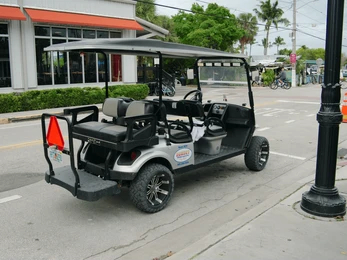
- Specialized manufacturers are setting the pace. Purpose-built fleet solutions — particularly in the electric utility and golf cart segment — are outperforming generalist approaches in reliability and total cost of ownership.
- Automation and chemical engineering underpin US industrial growth. Domestic manufacturers investing in smart production are delivering faster lead times and tighter quality control than offshore alternatives.
- Supply chain resilience depends on domestic sourcing. As global logistics remain volatile, partnering with US-based manufacturers reduces exposure to delays and price shocks.
- The EV shift is now an industrial story. Electric vehicles are moving well beyond passenger cars — [fleet operators](https://www.merchantsfleet.com/industries/manufacturing-fleet-management/) managing warehouses, campuses, and facilities are standardizing on electric utility carts at scale.
- Vetting criteria matter as much as brand recognition. Certifications, after-sales support, and parts availability often separate dependable long-term partners from one-time vendors.
Before committing to any manufacturing partner, align your selection criteria with your fleet’s actual operational demands — not just the spec sheet.
If you still have questions about which companies lead specific segments or how regulatory frameworks affect your choices, the next section addresses the most common fleet manager concerns directly.
Frequently Asked Questions About Industrial Manufacturing
Wrapping up this guide, here are answers to the questions fleet managers and procurement teams ask most often when evaluating industrial manufacturing partners for high-performance fleet solutions.
What are the top manufacturing companies in the USA? According to ZEISS, the leading U.S. manufacturers span aerospace, automotive, defense, and heavy equipment sectors. Names consistently recognized include Boeing, Caterpillar, General Motors, Lockheed Martin, and Ford — each setting benchmarks for scale, quality control, and supply chain resilience.
Who manufactures the best high-capacity electric golf carts for fleet use? In practice, the strongest contenders combine lithium battery technology, rugged utility frames, and scalable fleet configurations. Purpose-built manufacturers focused on industrial mobility — rather than recreational carts — tend to deliver the durability and payload specs that large facilities demand.
What is the role of Manufacturing USA in industrial innovation?Manufacturing USA focuses on innovation and collaboration to maintain a competitive edge in the global market, connecting manufacturers, research institutions, and government agencies to accelerate next-generation production capabilities.
What is the final recommendation for fleet managers? Prioritize partners that align technology, service infrastructure, and total cost of ownership — not just upfront price. The right industrial manufacturing company functions as a long-term operational asset, not a one-time vendor.
Start your partner evaluation today by benchmarking at least three manufacturers against the criteria covered throughout this guide.