
Charging time should be planned around the timetable the cart must survive
Electric golf cart charging time is easy to oversimplify because many buyers start with a brochure number and stop there. In real service, the useful question is whether the cart can leave the charging area ready for the next route without forcing staff to cut inspections, swap vehicles, or delay passengers. Teams comparing Electric Golf Cart Products should treat charging time as an operating variable linked to route length, battery size, charger power, weather, payload, and the discipline of the return process. Basic background from golf cart background is helpful, but daily readiness comes from planning rather than a headline specification.
A short-turn guest route and a long shuttle loop can create very different charging pressure even when both use electric golf carts from the same family. A property may rely on Golf Cart Solution during front-of-house peaks and Park and Outdoor Transport Solution for longer site circulation, yet both duties can converge at one charging row when the shift changes. If the fleet manager does not map those overlaps, the result is not only slower charging. It becomes blocked aisles, rushed plug-in habits, late departures, and unclear responsibility for carts that return with low reserve.
This guide focuses on how buyers and operators should plan electric golf cart charging time in a practical way. It covers what affects refill speed, how to judge opportunity charging windows, why route timing matters more than optimism, and which questions a supplier should answer before a purchase order is approved. General safety guidance from OSHA battery charging guidance and infrastructure context from U.S. DOE charging basics are useful references because they reinforce the same principle: charging is a managed work zone, not just a parking space with wires.
Start with the busiest return window, not the average day
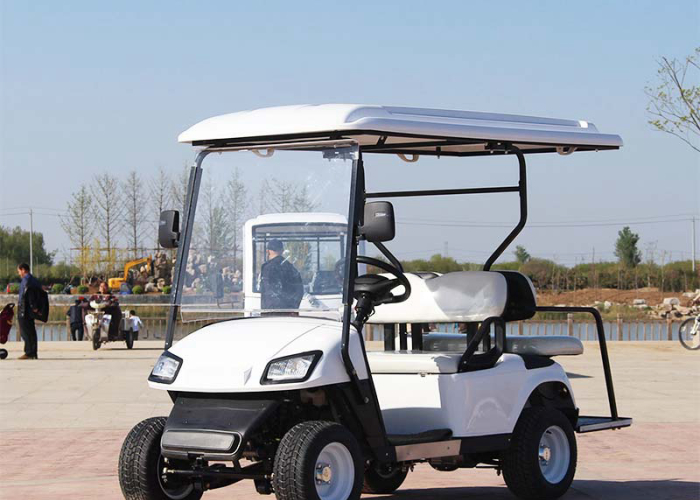
Charging plans fail when they are built around an average route instead of the busiest hour. A fleet may look calm on paper, then send six carts back to the same line within twenty minutes because breakfast service, tour turnover, and staff handoff all happen together. That is why buyers should map the real return peaks first. If a site mainly uses VY-A4 4 Seater Golf Cart for short guest movement and VY-A6 6 Seater Golf Cart for larger transfer loops, the charger row should reflect how those vehicles actually come home rather than how they look in a static lineup.
An accurate map should include the route distance, the approved passenger count, how often the cart stops, whether drivers wait with lights and accessories on, and how much reserve managers want before the next departure. A cart that returns with a comfortable buffer can tolerate a shorter plug-in window than a cart that finishes nearly empty. The discipline of writing down those conditions often reveals that the true problem is not charger speed but unrealistic route assignment.
It is also worth checking where drivers walk after they park. Charging spaces should not create cable paths across busy pedestrian routes or ramps. Public guidance from ADA mobility device guidance is useful here because it reminds managers that access and clearance matter even in operational areas. A bay that technically fits the fleet can still be a poor choice if operators must squeeze past chargers, doors, and stored equipment every time they connect a vehicle.
| One long daily shift | Prioritize predictable overnight charging, morning inspection time, and clear exception handling. |
| Several short route waves | Prioritize turnaround access, charger labeling, and carts that can re-enter service quickly. |
| Mixed passenger and utility use | Separate by duty if return timing or charger access conflicts repeatedly. |
Know what really changes charging time
Battery chemistry matters, but it is not the only factor. A lithium pack may support a simpler daily routine than an older lead-acid setup, yet the useful outcome still depends on charger output, how deeply the battery was used, ambient temperature, and whether the site follows the recommended sequence every time. The Battery University charging overview overview is helpful for general charging behavior, especially for teams moving from older battery habits to lithium-based thinking.
Voltage labels should also be read carefully. A buyer can compare nominal battery voltage, charger rating, and usable duty cycle, but none of those numbers means much without the route. The broader EV guidance at U.S. Department of Energy EV and charger overview is a good reminder that charging speed, energy use, and daily scheduling always belong together. A cart that looks fast to recharge in one scenario may still be the wrong match if the property expects heavy payloads and minimal dwell time between trips.
For fleet planning, it helps to think in terms of readiness windows instead of raw hours. Alternative-fuel resources such as Alternative Fuels Data Center electric-vehicle overview are useful because they frame charging as part of an operating system. That is the right mindset for golf carts as well. Managers should ask, how long do we actually have between the end of route A and the required departure for route B, and what battery reserve is acceptable at that handoff point?
Build a return process that protects the charging window
A charging area works best when the return sequence is boring. The driver parks in the assigned space, notes the battery state, checks for obvious damage, plugs in correctly, and marks whether the cart is ready, charging, or held for service. When that sequence changes from driver to driver, managers lose control of charging time because the clock starts only when the cart is actually connected and left in the right condition.
Electrical discipline matters as much as fleet discipline. Cables should be routed to avoid strain, connectors should stay clean, and staff should know which conditions require a supervisor instead of guesswork. Background from UL Standards and Engagement and NFPA electric vehicle safety resources is useful here because it reinforces why charging equipment, cable condition, and heat around electrical systems deserve attention even when the vehicle seems simple to use.
Supervisors should also decide how exceptions are handled. If a cart returns late, can it still meet the next departure? If not, which backup unit moves into service and who records that change? Formalizing those decisions prevents emotional last-minute choices that erase the value of the planned charging window. The more the fleet grows, the more helpful a visible procedure becomes.
Match charging time planning to route design and weather
Charging time is not independent from route behavior. The same battery can look efficient on a flat loop with light boarding and then feel slow to recover after a route with repeated stops, long idling periods, or wet-weather accessory use. The CPSC golf cart and LSV safety guide guide is useful background because it pushes operators to think about how vehicle use, passenger safety, and route conditions interact rather than treating the cart as an isolated device.
Weather deserves its own line in the operating plan. Heavy rain, heat, and seasonal route changes can alter both energy use and the comfort of the charging area. Lightning and flood resources from OSHA electrical safety guidance, National Weather Service lightning safety guidance, and National Weather Service flood safety guidance are valuable reminders that an outdoor or semi-outdoor charging row should be reviewed as an environment, not just as a piece of equipment. A fleet can lose time simply because staff are reluctant to work in a poorly protected bay during bad weather.
A good buyer conversation therefore includes route slope, stop frequency, expected accessories, seasonal conditions, and whether the property expects opportunity charging between trips. Those details make the supplier’s estimate more useful and give the operating team something real to test before the fleet is expanded.
Ask the supplier for timetable proof, not only charger claims
A serious supplier should be comfortable discussing how long the cart needs to recover from a real route rather than repeating one ideal charging figure. Buyers can use Electric Golf Cart Blog to frame the right questions, then move to Request a Quote with a route summary that includes shift pattern, longest loop, average passenger load, accessory use, charger voltage, and the reserve expected before the next dispatch. That is a far better brief than simply asking how many hours charging takes.
Support questions matter after delivery as well. Ask which charger is included, whether alternative charger specifications are available, what indicators the driver should watch, and how to handle a cart that does not recover on schedule. Warranty guidance from FTC warranty guidance and standards context from ANSI standards overview are useful reminders that documentation and support language should be clear before a fleet is committed, not after a dispatch problem appears.
The best charging-time plan is the one the site can actually repeat every day. If a timetable depends on perfect discipline, no weather changes, and no late returns, it is too fragile. A stronger plan leaves room for inspection, mistakes, and route variation while still keeping vehicles ready. When that balance is clear, the final specification conversation through Contact Varyon is usually faster and more accurate.
Run a timetable acceptance test before scaling the fleet
Before approving several units, a buyer should run a realistic acceptance test with the longest expected route, the heaviest approved passenger load, and the actual charger arrangement that will be used on site. The point is not to prove the cart can recover once under ideal conditions. The point is to see whether the full cycle of dispatch, route completion, return, plug-in, inspection, and next departure still works when people are slightly rushed and the property is operating normally.
A useful test includes more than one cycle. Run the cart out, bring it back, document the reserve, connect it exactly as staff will connect it later, and then check whether the next assignment can leave on time with the agreed margin. If the property depends on opportunity charging, repeat the same process with the shorter dwell window instead of only using overnight recovery. This reveals whether the planned charging time is robust or whether it depends on ideal behavior that will fade after the first busy week.
The results should be recorded in simple language that operations, service staff, and procurement can all understand. Write down route length, passenger count, accessory use, charger used, weather conditions, return battery state, charge duration, and readiness at the next handoff. A written acceptance note is far more useful than a general impression that the cart seemed fine. It gives the supplier and the site team a factual reference if the fleet expands or if later carts behave differently under the same duty cycle.
Video reference
The video below is included as a practical visual reference for electric golf cart operation. Use it alongside the route timetable, charger instructions, and site rules for your own fleet.
Questions buyers often ask
How should buyers evaluate electric golf cart charging time?
Evaluate it against the real route, payload, shift schedule, reserve target, charger specification, and available dwell window. A single quoted hour figure is not enough for fleet planning.
Does faster charging automatically solve fleet turnover problems?
No. Many turnover problems come from poor bay layout, inconsistent plug-in habits, late returns, or unrealistic route assignment. Charger power helps only when the process around it is stable.
What should be tested before accepting a fleet?
Test the longest realistic route, the expected passenger load, the actual charger setup, and the available return window. Confirm that the cart comes back with enough reserve and can recover within the site’s timetable.
Treat charging time as an operating promise
When electric golf cart charging time is planned around the busiest real duty cycle, buyers get better answers and operators get fewer surprises. The useful benchmark is not whether the cart charges eventually, but whether it returns to service calmly, safely, and with enough reserve for the next job.
A route-based brief, a disciplined charging row, and clear support questions produce a better result than a brochure comparison alone. That approach protects uptime and makes the next purchase decision much easier to defend.