Range planning starts with the route, not a brochure number
Electric golf cart range is not a single fixed distance that can be copied from a specification sheet into an operating plan. The useful question is whether a particular cart can complete a defined route, with a realistic passenger or cargo load, in the expected weather, and still return with enough reserve for delays. Buyers reviewing Electric Golf Cart Products should therefore treat advertised range as a starting point for testing rather than a promise that every property will reproduce the same result.
A resort loop with level pavement and two passengers creates a very different energy demand from a hilly campus route with repeated stops, full seating, lights, and long waiting periods. The U.S. Department of Energy battery-drain guidance explains that speed, acceleration, weather, and weight can all change battery use. That general principle applies directly to low-speed fleets: route conditions determine usable range, while good records turn an uncertain estimate into a repeatable operating limit.
Map one complete duty cycle before comparing batteries
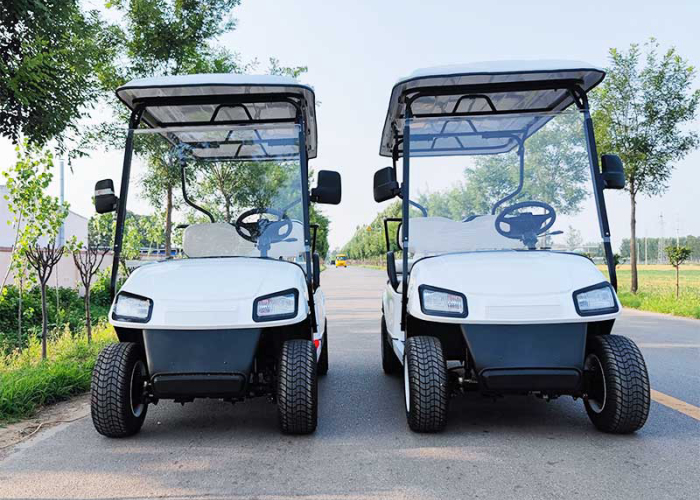
Begin by drawing the entire duty cycle from charger departure to charger return. Include deadhead movement, passenger collection, service detours, cleaning trips, and the distance traveled while repositioning between shifts. Many range estimates fail because the buyer measures only the visible passenger loop. A compact lithium model such as the VY-D2 Lithium Battery Golf Cart may fit a short route very well, but the decision still depends on all movement that occurs around that route, not just the distance guests can see.
Record distance, number of stops, average stop duration, steepest grade, surface type, and the longest expected period away from the charger. The U.S. Department of Energy EV and charger overview provides useful background on how battery-electric vehicles store and use energy, while the Alternative Fuels Data Center electric-vehicle overview highlights the importance of vehicle requirements, infrastructure, and training. Those broad planning categories become practical when they are translated into a simple route sheet that operators can check every day.
| Route distance | Include passenger service, repositioning, detours, and return to the charging bay. |
| Load pattern | Record typical and maximum passengers, luggage, tools, or supplies. |
| Terrain | Note long grades, soft surfaces, tight turns, and repeated stop-start sections. |
| Time window | Measure the longest period the cart must remain available before charging. |
Use measured energy consumption instead of optimistic assumptions
The strongest estimate comes from a controlled trial with the candidate cart or a closely matched model. Start at a documented state of charge, run the actual loop with the expected load, and record the ending state of charge. Repeat the trial several times rather than trusting one favorable result. If the site is comparing an A Type Electric Golf Cart with other passenger platforms, use the same route, driver instructions, load, tire pressure, and starting condition so the results can be compared fairly.
A single percentage reading should not be treated as laboratory precision, especially when the display rounds values or estimates remaining capacity. The purpose is to build an operating benchmark. The Battery University charging overview offers background on lithium-ion charging behavior, and the U.S. DOE charging basics explains charging infrastructure fundamentals. Buyers should combine that general guidance with the supplier manual, battery data, and repeated route observations before setting a dispatch limit.
Calculate a reserve that protects the final trip
A fleet should never plan to use every displayed percentage point. Reserve capacity covers an extra pickup, a blocked path, a missed charging connection, an unexpectedly heavy load, or a gradual change in battery performance. The reserve does not need to be the same for every operation, but it should be written down. A route that serves guests late at night or carries staff far from the depot needs a more conservative reserve than a cart circulating beside the charger.
One practical method is to measure the energy used by the longest normal loop, add the energy needed for one credible disruption, and then add a separate return-to-base margin. A four-passenger platform such as the VY-A2+2 Electric Golf Cart should be tested with the seating and luggage pattern it will actually carry. This prevents the buyer from approving a range plan based on an empty vehicle that rarely exists during real service.
Passenger weight, cargo, and accessories change the result
Every additional passenger or cargo item increases the work required to accelerate, climb, and travel across soft ground. Roof enclosures, windshields, utility boxes, coolers, and other accessories can also alter weight or aerodynamic drag. The effect may be modest on one short loop, yet it becomes meaningful across many repetitions. The CDC motor vehicle safety resources emphasizes safe motor-vehicle practices, which is a useful reminder that load planning must protect control and visibility as well as battery capacity.
Create at least three load cases: light service, normal service, and the heaviest permitted service. Run or estimate the route for each case and assign dispatch rules accordingly. Do not solve a range shortage by allowing unsafe loading or by asking drivers to rush. A reliable plan respects the vehicle’s stated capacity, keeps aisles and sight lines clear, and uses a different cart or an extra trip when demand exceeds the defined operating case.
Grades and surfaces deserve their own test
A route with repeated grades can consume more energy than a longer level route because the cart must climb under load and then regain speed after curves or stops. Grass, loose gravel, sand, and damaged pavement can add rolling resistance. A buyer comparing the D Type Electric Golf Cart should test the steepest credible section with the intended passenger count, not merely drive a short demonstration on flat concrete near the showroom.
Mark the sections where drivers naturally accelerate hard, queue, reverse, or make repeated low-speed turns. Smooth driving can reduce unnecessary energy demand, but training should never be used to hide a route that is poorly matched to the vehicle. The NHTSA low-speed vehicle guidance and low-speed vehicle background provide useful context on low-speed vehicle categories and safety equipment. Local rules and the vehicle’s intended classification must be checked separately before any public-road use.
Weather changes range and charging behavior
Temperature affects battery performance, while wind, rain, and the use of lights or other electrical accessories can change daily demand. The size of the effect depends on the battery system and conditions, so a generic percentage should not be inserted into a fleet plan without testing. Instead, repeat the route study during the most demanding season the property expects and compare the result with mild-weather operation.
Covered parking, correct charging procedures, and a stable inspection routine help reduce avoidable variation. The NFPA electric vehicle safety resources provides electric-vehicle safety resources, and UL Standards and Engagement explains the role of safety standards and product evaluation. These sources do not replace model-specific instructions, but they help buyers ask better questions about charger location, listed components, cable protection, ventilation, and emergency response.
Charging windows must match the operating timetable
Range planning is incomplete until the property knows when and where the cart can recharge. A route may be well within the battery’s capability and still fail operationally if every vehicle returns to too few outlets at the same time. Map charger occupancy by hour, allow time for inspection and cleaning, and keep cables away from passenger walkways. The Golf Cart Solution can help frame a site-specific discussion around fleet size and operating windows.
Charging areas should be managed as work zones rather than casual parking spaces. The OSHA battery charging guidance describes precautions for battery charging, and the OSHA electrical safety guidance provides broader electrical-safety guidance. Follow the cart, battery, and charger manufacturers’ instructions, use suitable electrical protection, and remove damaged equipment from service. A schedule cannot be considered efficient if it depends on unsafe connections or improvised extension arrangements.
Turn daily records into a practical range baseline
Once vehicles enter service, record starting charge, ending charge, distance or number of loops, approximate load, weather, and any unusual event. The log should be short enough that drivers actually complete it. After several weeks, the fleet manager can identify which route consumes the most reserve, whether one cart behaves differently, and whether a schedule change is increasing energy demand. This is more useful than arguing about a theoretical maximum range.
Review the log alongside tire condition, brake drag, alignment, charger faults, and accessory use. A gradual change may point to maintenance rather than battery capacity alone. Resources such as ANSI standards overview help buyers understand how standards support consistent processes, but the daily evidence still comes from the property. The Electric Golf Cart Blog can also be used to connect range records with broader maintenance and fleet-planning guidance.
Run an acceptance test before approving the fleet plan
Before final acceptance, run the longest planned route at the heaviest approved load during a realistic service window. Confirm that the cart returns with the agreed reserve, that braking and steering remain controlled, and that the charger can restore readiness within the timetable. Repeat any surprising result. One unusually good run should not set the standard, and one disrupted run should be investigated before the vehicle is rejected.
Document the route, ambient conditions, driver, load, starting and ending state of charge, and any warning indicators. Ask the supplier to explain the correct charging process and the factors that would require service. This creates a shared baseline for later troubleshooting and prevents vague disagreements. It also helps the buyer decide whether the selected battery, charger count, and fleet size support the real job without depending on mechanical padding in the schedule.
Use a dispatch board to protect the reserve in real time
A measured range policy still needs a simple way to guide daily decisions. A dispatch board can show each cart’s starting charge, assigned route, expected return, and minimum acceptable reserve. When demand changes, the dispatcher can move a short task to the cart with the strongest margin instead of sending the nearest vehicle without checking its remaining duty. This is particularly useful when several models share one depot but have different loads and battery configurations.
The board should also identify carts that are charging, awaiting inspection, or temporarily restricted to shorter routes. Operators report unexpected detours and low-charge warnings immediately, allowing the next assignment to be adjusted before a vehicle misses its return margin. This small control turns range planning into an active operating practice and gives supervisors a clear record when they review whether the route design, charger capacity, or fleet size needs to change.
Video reference
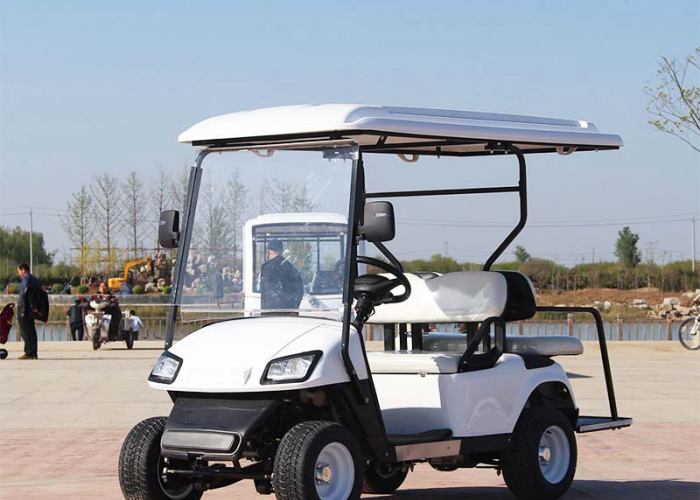
The video below shows a Varyon passenger cart in operation. Use it as a visual reference for loading, acceleration, turning, and route conditions, then perform the measured site test described above before setting an operating range.
Questions buyers often ask
Can advertised range be used as the daily dispatch limit?
No. Advertised range is normally based on defined conditions that may not match the property. Establish a site limit from repeated tests with realistic loads, terrain, weather, and a written reserve. The operating limit should be lower than the point at which the cart would arrive with no practical margin.
How often should a fleet repeat its range test?
Repeat it when the route, battery, charger, passenger load, accessories, or season changes, and whenever records show a meaningful decline. A shorter verification loop can be used routinely, while the full-load acceptance route is useful after major service or when evaluating a new model.
What information should be sent with a range-related quote request?
Send the route distance, grades, surface, passenger and cargo loads, service hours, charger location, climate, reserve expectation, and fleet size. A structured brief through Request a Quote gives the supplier enough context to discuss battery and charging options without guessing.
A dependable range figure is an operating decision
The best electric golf cart range estimate is not the largest number on paper. It is a conservative, repeatable distance that the cart can complete on the buyer’s route while preserving passenger safety, charger access, and a credible reserve. That figure comes from measurement, not optimism.
When route maps, full-load tests, charging windows, and daily records agree, the fleet manager can dispatch with confidence and recognize changes early. The result is a range policy that supports service every day instead of a specification that looks impressive but cannot guide a real shift.