A route safety audit turns daily familiarity into written control
Electric golf cart route safety is easy to underestimate because the vehicle is quiet, familiar, and usually moving at low speed. Resorts, campuses, communities, parks, and venues often add carts gradually until a route grows around habit rather than design. A route safety audit brings that habit back into view. It checks stops, crossings, grades, visibility, pedestrians, charging, weather rules, and incident records before small weaknesses become normal.
The audit should cover the full duty cycle: leaving the charger, reaching the first stop, carrying passengers, crossing shared paths, returning, parking, charging, cleaning, and handling disruptions. The NHTSA low-speed vehicle guidance and CPSC golf cart and LSV safety guide provide useful low-speed vehicle safety background, while ADA mobility device guidance helps keep passenger access and mobility concerns in the discussion. Local rules, property policy, and the exact cart classification still need separate review.
This guide is for fleet managers and buyers comparing route needs across Electric Golf Cart Products, including C Type Electric Golf Cart passenger carts and mixed-use service models. It is not a legal opinion or engineering certification. It is a practical field checklist that helps a site see where carts, people, terrain, and operations meet.

Start by drawing the route from charger to charger
Map the cart from its charging bay to every stop and back again. Include service detours, staff-only paths, storage areas, cleaning points, and places where the vehicle reverses or waits. Mark where passengers board, where pedestrians cross, where vehicles share space, and where the driver needs help seeing around landscaping or structures. A route that looks simple on a brochure map often becomes more complex once charger return and staff movement are included.
Use one map for normal operation and another for peak periods or bad weather. The National Weather Service flood safety guidance and National Weather Service lightning safety guidance resources are useful reminders that a route is not always available just because it is open on a sunny day. Record which sections close after heavy rain, which stops move under shelter, and who has authority to pause service when visibility, wind, flooding, or lightning risk changes.
| Boarding stop | Check level surface, sight lines, queue control, handholds, lighting, and passenger briefing. |
| Pedestrian crossing | Check separation, speed control, signage, visibility, and driver decision point. |
| Slope or ramp | Check approved grade, surface condition, drainage, load rule, and braking confidence. |
| Charging return | Check cable paths, parking order, inspection space, and separation from passenger areas. |
Audit stops before auditing straight sections
Most conflicts happen where people gather, board, step off, ask questions, carry bags, or hesitate. Stand at each stop during a real service window and watch how passengers approach from different directions. Look for umbrellas, luggage, strollers, mobility devices, tour groups, or staff carts entering the same space. A good stop gives the driver a clear arrival line and gives passengers a simple place to wait without spilling into the cart path.
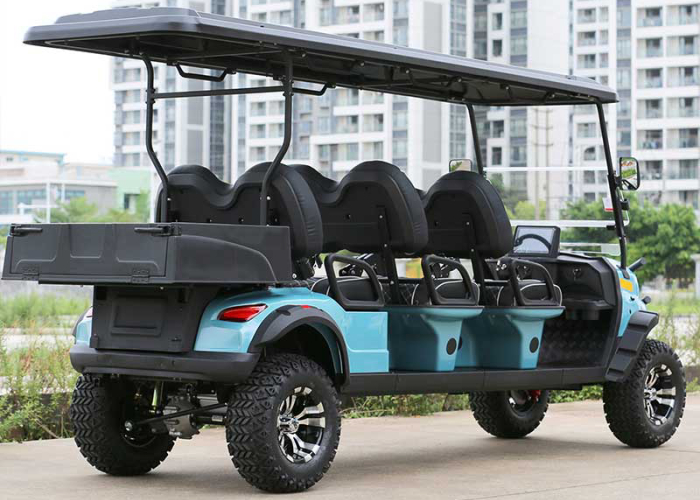
For routes using VY-C6+2 Eight Seater Golf Cart or other larger passenger models, boarding time and turning space matter more than open-road speed. The stop should not require the cart to block a sidewalk, reverse through a queue, or load from a slope unless the manufacturer and property procedure allow it. Small changes such as moving a sign or marking a waiting line can sometimes improve safety more than buying another vehicle.
Check visibility at crossings, corners, and shared paths
Walk the route at driver eye level and pedestrian eye level. Landscaping, parked cars, signs, utility boxes, delivery vehicles, and crowds can block views even on a route that seems familiar to staff. Identify where a driver must slow before seeing the crossing and where pedestrians first notice the cart. Add mirrors, markings, lighting, or route changes only after confirming they solve the specific visibility problem.
The CDC motor vehicle safety resources motor-vehicle safety resources reinforce the value of predictable behavior and safe operating practices. A quiet electric vehicle can surprise pedestrians if the route relies on sound alone. Use driver briefings, speed limits, stop rules, and clear passenger instructions so visibility is supported by behavior, not just hardware. The Golf Cart Solution page can frame a broader route-planning discussion with supplier support.
Review slope, surface, drainage, and braking confidence
Grades and surfaces should be audited under realistic load, not only while empty. Check whether braking feels controlled on the steepest approved section, whether tires maintain traction on wet or shaded areas, and whether water or loose material collects at the bottom of a slope. If drivers naturally avoid a section or slow sharply, the route may be telling the manager where formal review is needed.
Surface condition changes over time. Pavers settle, roots lift paths, gravel migrates, drainage blocks, and grass edges soften. Use the NHTSA TireWise safety guidance guidance as a reminder that tire condition and pressure affect control, but do not treat tires as a cure for poor surfaces. A route safety audit should generate facility work orders when the path itself has become the hazard.
Control mixed traffic and service vehicles
Many properties let carts share space with delivery vans, bicycles, scooters, maintenance equipment, pedestrians, and private vehicles. List every shared zone and decide which user has priority, where carts must stop, and when service vehicles are excluded. A cart route that is safe at 10 a.m. may become disorganized when deliveries arrive or when guests leave an event together.
If the route touches public roads or areas regulated by local traffic rules, classification matters. The 49 CFR 571.500 gives federal background for U.S. low-speed vehicles, and low-speed vehicle background provides general category context. The property still needs to check local law, insurance, equipment requirements, and permitted operating areas. Do not assume a private-site route automatically authorizes public-road travel.
Inspect the charging and parking area as part of the route
A cart route is not finished when passengers step off. Parking, charging, cleaning, and next-shift staging are part of the same system. Check whether carts queue safely, whether cables cross walking paths, whether drivers can reach chargers without tight reversing, and whether inspection space is available before the next trip. A clean loading stop means little if the return bay creates a different hazard.
The U.S. DOE charging basics and OSHA battery charging guidance resources help frame charger planning and battery-charging precautions. Keep wet cleaning separated from charging, remove damaged cables from use, and assign responsibility for the area. A cart should not be parked wherever there is a free outlet if that location blocks evacuation paths, guest movement, or maintenance access.
Use incident and near-miss records to guide changes
Incident logs should include more than injuries or damage. Record sudden stops, passenger slips, wrong-way driving, blocked stops, charger cable trips, visibility complaints, repeated horn use, and driver reports of confusion. Near misses often reveal route weaknesses before the cost becomes visible. Review the records by location and time of day rather than treating every event as a driver issue.
The ANSI standards overview standards overview is useful because it supports consistent processes and documentation. A simple heat map can show whether one crossing, one stop, or one return bay creates most of the trouble. Use that evidence to change route markings, shift schedules, boarding rules, or vehicle assignments. The Electric Golf Cart Blog can hold supporting fleet guidance so staff and buyers share one operating language.
Train drivers and passengers around the audited route
After the audit, update driver training with the actual route hazards: where to slow, where to stop, where to avoid reversing, which sections close in rain, and how to report a blocked path. Passenger briefing should be short but consistent: remain seated, keep belongings inside, wait for the driver’s instruction, and use approved boarding points. Repeat the message especially for event and tour routes with changing riders.
For carts with accessories or premium features, such as those reviewed at Golf Cart Accessories or D Type Electric Golf Cart, make sure visibility and passenger comfort do not hide basic route rules. Curtains, storage boxes, branding panels, or lighting upgrades should be checked against the audited sight lines and boarding behavior. A beautiful cart that blocks a mirror or narrows a walkway has created a new risk.
Repeat the audit after route or fleet changes
Audit again when the property adds vehicles, changes stop locations, opens a new building, adds landscaping, changes charger layout, introduces new accessories, or expands service hours. A route approved for two compact carts may not work the same way with larger shuttles or heavier passenger flow. Treat the audit as a living operating control, not a one-time document created for a purchase file.
When asking for a new configuration through Request a Quote, include the route map, known hazards, passenger volume, charger bay layout, and desired accessories. This gives the supplier a clearer picture of how the cart will be used. It also prevents procurement from choosing a vehicle that looks suitable in isolation but creates friction at the actual stop, crossing, or charger return point.
Assign ownership for every corrective action
A route audit only improves safety if each finding becomes a named action. Separate issues into facilities work, driver training, signage, schedule changes, charger layout, vehicle assignment, and procurement review. A blocked sight line may belong to landscaping, while a confusing stop may belong to operations. Without ownership, the same finding will appear in the next audit and everyone will remember discussing it without anyone being responsible for closing it.
Use simple priorities. Immediate hazards close before the route continues. Medium-priority findings receive a date and temporary control. Low-priority improvements enter the next planning cycle. Photograph the condition before and after correction, and update the route map when a stop, crossing, or charger path changes. The audit record should show that the property learned from the field walk rather than merely completed a form.
Corrective action ownership also helps future buying decisions. If repeated findings involve visibility, boarding comfort, or charger congestion, the next cart order can address those realities. If the problems are mostly route geometry or crowd management, buying a different vehicle may not solve them. That distinction is exactly why a practical audit has value beyond safety paperwork.
Video reference
The video below shows a Varyon passenger cart in operation. Use it to think about visibility, turning space, boarding behavior, and route presence, then compare those observations with the route audit checklist above.
Questions buyers often ask
How often should a golf cart route safety audit be repeated?
Repeat it after any route, charger, fleet, accessory, building, landscaping, or service-hour change, and review it at least seasonally for busy commercial routes.
What is the most common audit mistake?
The most common mistake is focusing on long straight sections while ignoring stops, crossings, charger return, weather closures, and pedestrian behavior. Stops usually reveal the most practical risk.
Should the supplier receive the route audit?
Yes. A route map with hazards, loads, stop spacing, and charger layout helps the supplier recommend suitable seating, accessories, charging support, and model families.
A safer route is designed, documented, and revisited
Electric golf carts work best when the route is treated as a managed system. Stops, crossings, slopes, charger bays, driver behavior, passenger briefing, and incident records all shape the final safety result. The route owner should keep the current map, temporary restrictions, and latest corrective actions visible to supervisors rather than buried in a one-time file.
A practical audit gives managers a way to improve the site before problems repeat. It also gives buyers better evidence when choosing carts, accessories, and charging layouts for future fleet growth. Review the audit with drivers after changes are made so the written route, the training routine, and the actual field behavior stay aligned. Keep the next review date visible so the route does not drift quietly as the property changes or seasonal traffic increases. A short review meeting after each major event can reveal route stress before it becomes routine.