Dimensions matter because most golf cart problems start in the spaces around the cart
Electric golf cart dimensions are often treated as a specification-table detail, but they affect everyday operation far more than many buyers expect. A cart can look perfect in a product photo and still create trouble if it does not fit a charger bay cleanly, turn through a service gate smoothly, line up with a trailer ramp confidently, or board passengers without crowding a narrow stop. Category background from golf cart background is helpful, but the real buying question is how the cart fits the physical spaces that shape the route.
This is why dimensions should be reviewed before the order, not after delivery. Parking depth, aisle width, roof clearance, trailer length, storage room access, pedestrian overlap, and charging cable reach all depend on actual measurements. Buyers comparing A Type Electric Golf Cart, B Type Electric Golf Cart, C Type Electric Golf Cart, and D Type Electric Golf Cart should think beyond brochure length and ask how the vehicle will enter, wait, load, and return in the spaces the site uses every day.
This guide is written for fleet buyers, property managers, transport planners, and operations teams who want to use electric golf cart dimensions for real site planning. It focuses on parking, trailer loading, boarding areas, turning room, charging aisles, and route access. General public guidance from CPSC golf cart and LSV safety guide, ADA mobility device guidance, and low-speed vehicle background adds helpful context, but the main goal is to measure the site so the chosen cart feels easy to use rather than awkward to manage.
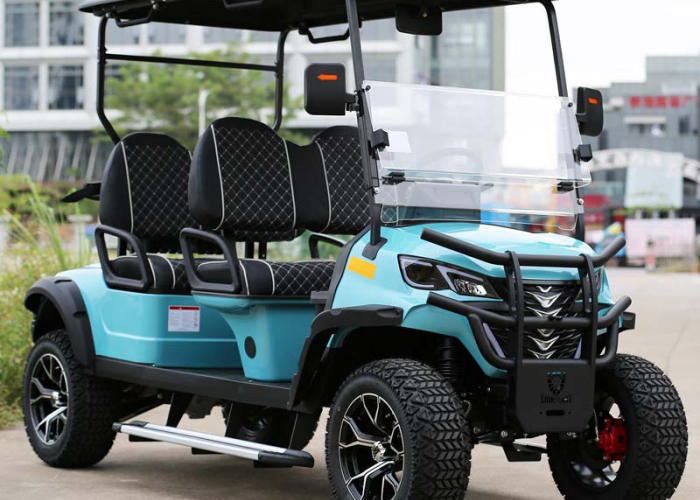
Measure the parking bay and charger aisle before you compare models
A parking space that seems generous for a passenger car can still be inconvenient for a golf cart fleet if the charger, wall clearance, and turning entry are not considered together. The buyer should measure the full approach into the bay, the depth needed to park straight, the side clearance required to connect the charger without strain, and the space needed to walk around the vehicle safely. These details matter more once several carts return at roughly the same time.
Charging aisles should be measured with the operator’s movement in mind, not just with the cart’s footprint. If the driver must reverse awkwardly or squeeze between bumpers and walls to connect the charger, the process will become inconsistent. Practical electrical-safety reminders from OSHA electrical safety guidance help frame why cable routing and dry charging space matter, even when the site is not thinking of itself as an industrial environment.
This measurement stage is also the best time to decide whether the site wants tighter compact parking or more generous staging for faster dispatch. A smaller cart such as VY-A4 4 Seater Golf Cart or VY-C4 Four Passenger Golf Cart may save space, but only if the parking layout still lets operators enter and leave without bumping mirrors, roofs, or adjacent chargers. If the site expects growth, parking should be designed for the next carts as well, not only for the first one.
| Parking depth | Measure full vehicle length plus clean charger access and operator walking space. |
| Aisle width | Measure turning entry, backing angle, and safe pedestrian separation. |
| Roof and top clearance | Check doors, canopies, trailers, and indoor storage openings. |
| Charger placement | Check reach, cable routing, dry conditions, and repeatable plug-in position. |
Once those measurements are written down, internal pages such as Electric Golf Cart Products and Request a Quote become much more valuable because the buyer can ask precise questions about model families instead of guessing whether any golf cart will fit. That shift from assumption to measurement is where better purchases begin.
Boarding zones and accessible routes need dimensional discipline
Boarding areas deserve separate attention because the cart footprint is only part of the story. The site should measure where passengers or staff stand before boarding, how the driver aligns the vehicle, whether there is enough room for bags or tools to stay organized, and whether nearby bollards, planters, or handrails force awkward stopping angles. These details shape whether the cart feels calm and easy to use or fussy and congested.
The same thinking applies to accessible movement zones. Guidance from ADA mobility device guidance does not turn a golf cart into an accessibility solution by itself, but it helps teams think more carefully about clear path width, turning space near stops, and whether a cart waiting at a pickup point interferes with pedestrian movement. Buyers who ignore these space relationships often discover that the cart fits the driveway but not the operating behavior around the stop.
Visibility and approach angle matter too. A longer cart can be excellent for shuttle work, but if the stop is short or offset near landscaping, operators may struggle to stage it neatly. That is where comparing VY-B4 Four Person Golf Cart, VY-C4 Four Passenger Golf Cart, and VY-D6+2 8 Seater Golf Carts with actual stop dimensions is more useful than talking about seat count in the abstract. The question is not only how many people the cart carries. It is how cleanly the cart arrives, waits, and leaves.
Trailer loading and transport planning should be measured like a route
Many buyers remember to compare dimensions for the site but forget to compare them for transport. If the cart will be moved between properties, delivered to remote projects, or carried for service, trailer loading should be planned with the same seriousness as the daily route. Measure deck length, ramp angle, tie-down points, roof clearance, turning approach onto the trailer, and the space needed for operators to step off safely once the cart is in position.
Tire condition and surface friction also affect trailer behavior. General reminders from NHTSA TireWise safety guidance and CDC motor vehicle safety resources are useful here because loading mistakes often come from rushing or treating low-speed equipment casually. The buyer should assume that loading may happen in rain, in fading light, or under time pressure. Those are exactly the moments when measured clearances, good tie-down logic, and a realistic ramp angle matter most.
Container or warehouse access should be reviewed in the same way. If the cart is shipped, stored, or moved through doors and ramps, note whether roof height, mirror width, and turning room remain manageable. Supplier coordination supported by references such as NIST supply chain management guidance helps remind buyers that space planning is not isolated from logistics planning. The physical fit of the cart affects shipping confidence as much as it affects parking convenience.
Turning room, weather exposure, and slope behavior all change how dimensions feel
A cart can technically fit a route and still feel awkward if operators must make tight turns near walls, drainage edges, or pedestrian corners. Turning space should be measured at the slowest and most crowded point of the route, not in an empty yard. Properties with decorative paving, narrow villa lanes, or mixed service alleys should pay close attention to the places where the roof line, rear overhang, or front wheel path create hesitation.
Weather changes these spaces too. A route that feels easy on a dry morning can feel narrow when surfaces are wet, leaves collect near curbs, or the team is trying to stage quickly before a storm. Public reminders from National Weather Service flood safety guidance and National Weather Service lightning safety guidance help operations teams think about when a route, loading area, or parking position becomes less safe even if the cart dimensions did not change. The goal is to plan for the hard day, not only for the easy day.
Slope and stopping room deserve the same respect. A longer or heavier cart may still be the right choice, but the buyer should check how much room the operator needs at the top and bottom of slopes, whether the stop zone stays level enough for comfortable boarding, and how the cart behaves when turning into a charger bay after a wet or busy shift. General low-speed vehicle context from NHTSA low-speed vehicle guidance and 49 CFR 571.500 is useful when the site is also thinking about mixed-use or public-adjacent spaces.
Use dimensions to compare model families instead of assuming every cart scales neatly
The most valuable part of dimensional planning is that it turns model comparison into a practical exercise. A family such as A Type Electric Golf Cart may suit golf-course and resort paths where simple passenger flow matters, while B Type Electric Golf Cart may feel better for mixed-use property movement, C Type Electric Golf Cart may fit specific passenger-route priorities, and D Type Electric Golf Cart may be chosen where appearance and route presence matter along with function. Dimensions help the buyer understand when each family truly fits the site instead of relying on labels alone.
This is also the point where the buyer should compare actual product pages such as VY-A4 4 Seater Golf Cart, VY-C4 Four Passenger Golf Cart, and VY-D6+2 8 Seater Golf Carts. Doing so with site measurements in hand changes the conversation. Instead of asking which model is popular, the buyer can ask which one fits the charger aisle, boarding pad, trailer deck, and service gate with the least compromise. That is a much stronger basis for a purchase decision.
If several departments are involved, dimension planning should be shared in one short document. Facilities may care about parking depth, operations may care about stop behavior, procurement may care about shipping, and drivers may care about turning confidence. A single drawing or measurement sheet helps those groups make one decision instead of four disconnected assumptions.
Run a measured site walk before you ask for the final recommendation
Before requesting a final recommendation, walk the property with a tape, sketch, or digital note and capture every space that matters: parking bay, charger aisle, ramp, trailer, service gate, narrow turn, stop pad, and indoor storage opening. Those measurements form the real brief for the purchase. Without them, the supplier can only guess whether the cart will feel right once it arrives.
That site walk should also note surfaces, weather exposure, and the busiest times when carts return together. If a property already knows that three vehicles arrive at the same charger area within a ten-minute window, that information changes how dimensions should be interpreted. The internal resources at Electric Golf Cart Blog and Contact Varyon are useful after those notes exist, because the follow-up discussion can stay focused on measurable constraints rather than loose preference.
A measured brief leads to a better quote, a better staging plan, and fewer surprises after delivery. It turns electric golf cart dimensions from a forgotten specification into a working design tool for the property.
That same brief should be kept after purchase and updated whenever the route changes. New chargers, different boarding stops, a new trailer, or a revised service gate can all change whether the original dimension choice still feels efficient. Treating the measurement sheet as a living operating document helps the property keep getting value from the cart instead of relearning the same space problems one season later.
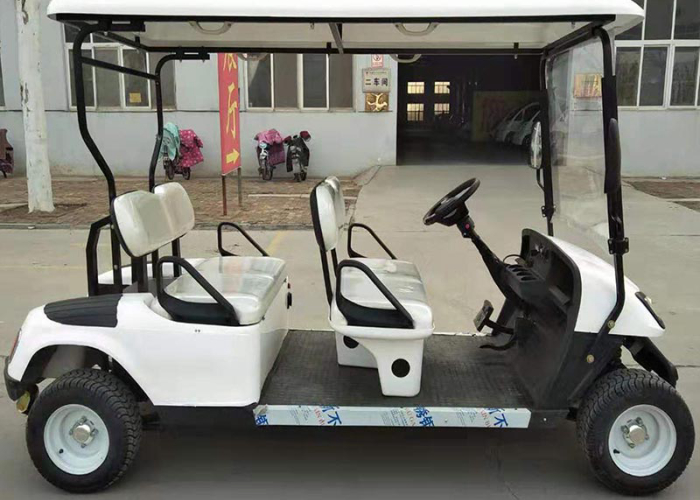
Video reference
The video below provides a useful visual reference for a Varyon passenger platform. Use it while comparing parking depth, boarding flow, and how the cart’s overall footprint may feel in a real site environment.
Questions buyers often ask
Why are dimensions so important if the route is short?
Because most operating friction happens at stops, charger bays, storage doors, ramps, and turns rather than in the middle of a straight route. Short routes still need clean staging space.
What should be measured first?
Measure the parking bay, charger approach, tightest turning point, and any trailer or ramp the cart must use. Those points usually reveal the most important limits quickly.
Can one dimension plan work for several cart families?
Yes, if the site records its hard limits clearly. Once those limits are known, different cart families can be compared against the same real spaces instead of being judged by marketing categories alone.
Final decision view
The right electric golf cart dimensions plan makes the vehicle feel easy to park, easy to charge, easy to load, and easy to stage at busy stops. That clarity protects the purchase long after the specification sheet is forgotten.
If the buyer can describe the site’s physical limits with confidence, the final cart choice becomes clearer, more efficient, and much easier to support.